
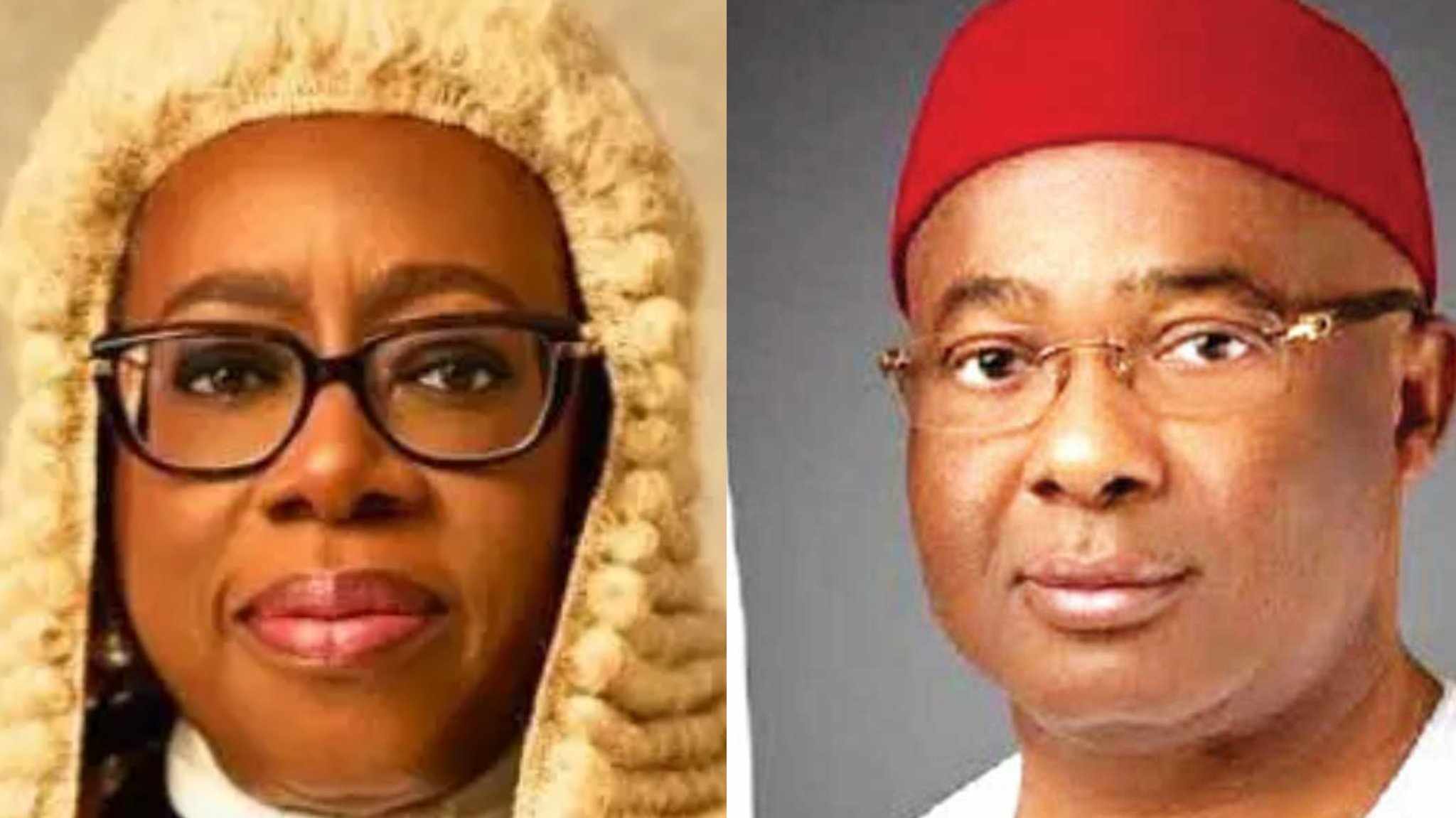
OPEN LETTER TO HIS EXCELLENCY GOVERNOR HOPE UZODIMMA ON THE URGENT NEED TO PROVIDE OFFICIAL VEHICLES FOR JUDGES, MAGISTRATES, AND CHAIRMEN OF CUSTOMARY COURTS IN IMO STATE.
By Chinedu Agu
Your Excellency,
I write this open letter in the public interest and in defence of judicial dignity, judicial security, and the integrity of the justice system in Imo State.
Let me begin by commending your recent presentation of a 2025 Toyota Land Cruiser Sport Utility Vehicle (SUV) to two Judges of the High Court of Imo State last week. That gesture deserves due acknowledgment. It reflects a commendable regard for the dignity of the Bench and an appreciation of the fact that judicial officers ought to be provided with facilities befitting the honour and responsibility of their office.
With the greatest respect, however, the exercise is yet to be fully completed. Of the ten judges appointed in Imo State in 2024, only three were left without official vehicles at the time of their appointment. With the release and allocation of two vehicles last week to two of those judges, it follows that one judge still remains without this essential official facility. In the interest of fairness, equity, and the institutional dignity of the Bench, it is only proper that this outstanding omission be urgently remedied.
In all honesty, that gap ought to be closed without delay. This appeal is not rooted in extravagance. It is rooted in decency, institutional respect, and the practical needs of those who daily bear the burden of adjudication.
The larger debate as to whether, in the light of the often trumpeted doctrine of judicial autonomy, this request ought properly to be directed to the Executive is a matter for another day and perhaps another piece. For today, the urgent point is simple. Judges, Magistrates, and Chairmen of Customary Courts in Imo State deserve the official vehicles that enable them to serve with dignity, safety, and reasonable prestige.
The risks of leaving judicial officers without official vehicles are obvious enough, even in broad terms: exposure to avoidable security incidents, indignity in public movement, impairment of institutional image, transportation difficulties, needless vulnerability, and erosion of the esteem that ought to surround the administration of justice.
Indeed, these risks are not speculative.
About two years ago, one of our judges, then without an official vehicle, was nearly assaulted at Warehouse Roundabout by an overzealous traffic warden who falsely accused the judge of beating the traffic light. I am informed that the allegation was wholly untrue. But for the prompt intervention of lawyers who were present at the scene, the incident could easily have degenerated into serious chaos on the road that morning.
Nothing could better illustrate the problem. A Judge of the State should not be exposed to that kind of humiliation while driving a private vehicle, unmarked by the dignity and protection that should ordinarily attend judicial office.
It is also no secret that some judges [especially the recently appointed] still drive the old vehicles which their long years of legal practice could manage to afford before elevation to the Bench. Some of those vehicles are worn, weather-beaten, tired, grumpy, and plainly not befitting of the office of a Judge. This is not said in scorn of personal effort. It is said in defence of public standards.
The office of a Judge is too weighty, too symbolic, and too central to the rule of law to be diminished by appearances of institutional neglect.
If the condition of some judges is concerning, that of Magistrates and Chairmen of Customary Courts is even more troubling.
The last notable time Magistrates in Imo State were given official vehicles was during the administration of His Excellency Rochas Okorocha, when a few Toyota Avanza [a make believe SUV] widely regarded as below modest and insufficient in both quality and quantity, were distributed by balloting. Even then, only about six Magistrates benefited. The rest were left out. Chairmen of Customary Courts were, of course, completely left out. That cannot by any standard be described as a durable response to the mobility needs of the lower Bench.
Today, many Magistrates still jump keke bus and board public transport. Some move in the same vehicles with litigants, accused persons, and others who may have business before their courts. That reality is unwholesome. It does no credit to the State.
With the steep decline in the real value of salaries, many judicial officers can no longer afford to purchase and maintain personal vehicles of a standard befitting their office. The situation is the same, if not worse, for Chairmen of Customary Courts, many of whom presently have nothing in the way of official mobility or institutional prestige. This state of affairs ought to trouble every person who genuinely cares about the proper administration of justice in Imo State.
Furthermore, in the distribution of official vehicles and other institutional facilities, the Bench must be treated with the dignity of the Bench, and not as though it were a mere stool.
A judicial officer need not live lavishly. But a judicial officer ought not live or move in a manner that strips the office of the quiet honour that sustains public confidence in the courts. Prestige is not vanity in this context. It is part of the moral architecture of justice.
I therefore respectfully but firmly urge Your Excellency to do the following.
First, complete the process already begun by releasing official vehicles to the remaining Judges who are yet to receive theirs.
Second, extend similar attention to Magistrates and Chairmen of Customary Courts, so that they too may work and move with the minimum dignity that judicial office requires.
Third, ensure that Imo State ceases to lag behind neighbouring States such as Enugu, Abia, and Rivers, where judicial officers enjoy a visibly better level of institutional support and prestige.
Your Excellency, governments are remembered not only for roads and concrete, but for the strength of the institutions they preserve. The judiciary is one of those institutions. To honour it is to honour justice itself.
You have taken a commendable first step with the recent release of quality SUVs to some Judges. I urge you to finish the job. Give the remaining Judges their cars. Give the Magistrates and Chairmen of Customary Courts official vehicles. Let judicial officers in Imo State enjoy at least the level of dignity, safety, and prestige that their counterparts elsewhere already take for granted. That would be a practical act of statesmanship. It would also be a lasting statement that in Imo State, justice is not merely preached. It is respected.
- Chinedu Agu is a human rights activist and past Secretary of NBA Owerri
(C) CITY LAWYER Magazine. All rights reserved. To join our Channel, click here. Click here to join our WhatsApp chatroom. Contact us at citylawyermag@gmail.com or 081-3838-0083