
Reminiscences of My Sojourn at the University of Nigeria, 1983-1989
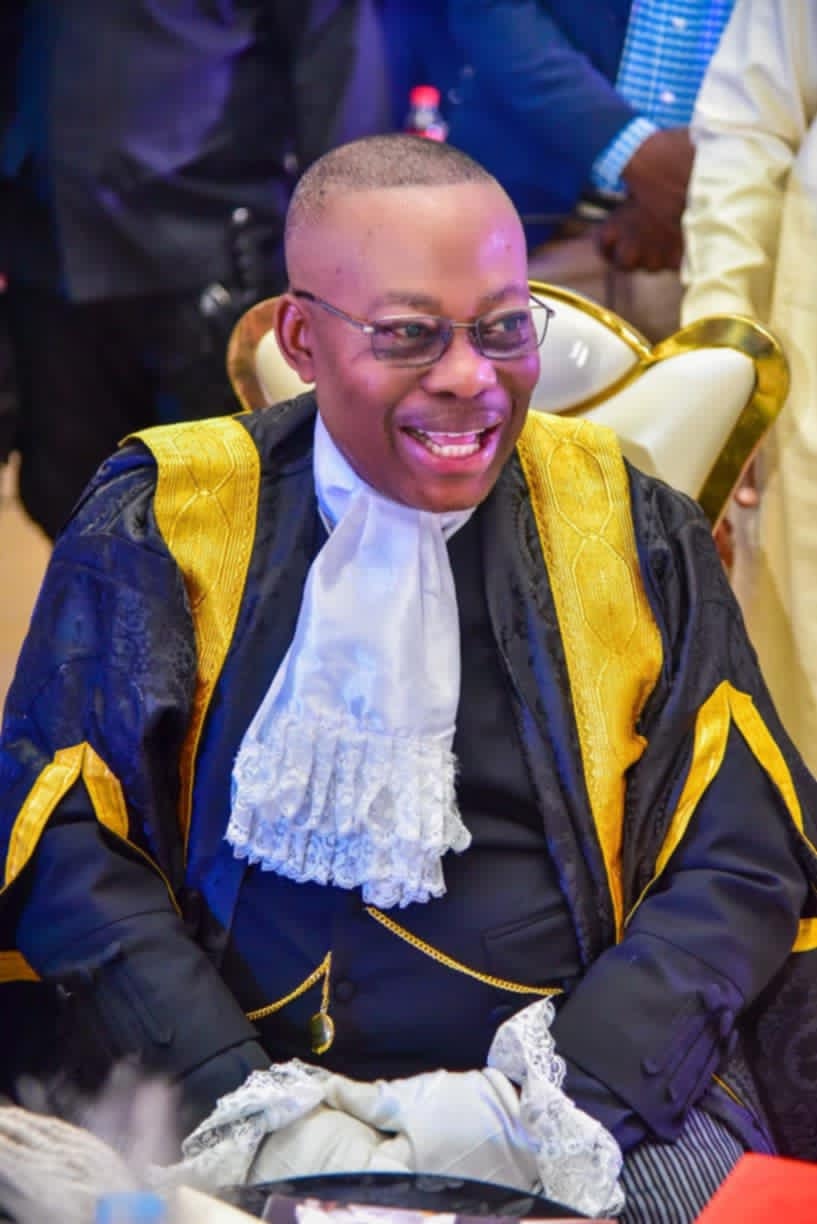
By Monday Ubani
Distinguished alumni, ladies and gentlemen,
There are places we visit, places we live in, and places that live in us.
For me, the University of Nigeria is not merely a place I attended between 1983 and 1989. It is a place that became part of my intellectual DNA. It shaped my worldview, tested my character, introduced me to friendships that have endured across decades, and planted ideas whose consequences I continue to experience in my professional and public life.
Whenever I close my eyes and travel back in time, I do not first see the buildings.
I see young men and women, full of dreams, anxieties, idealism and uncertainty, who arrived at the University of Nigeria believing that they were going to acquire degrees, but who eventually discovered that the university was also acquiring, refining and remaking them.
My own journey began in 1983 at the Nsukka Campus, where I enrolled to study Political Science.
I was young. I was ambitious. I had the curiosity of a young man who wanted to understand society and, perhaps, understand himself.
Political Science was more than an academic discipline to me. It was an introduction to the architecture of power, government, institutions, ideology and the complicated relationship between the governed and those who govern.
At Nsukka, I began to appreciate that a university education was not simply about passing examinations. It was about learning to ask difficult questions.
Why do societies succeed or fail?
Why do institutions collapse?
What makes government legitimate?
One philosophical quote stuck with me: “The unexamined life is not worth living.”
Remember Socrates?
The questions continued:
Why do some nations develop while others remain trapped in poverty and instability?
What is the relationship between law, politics and justice?
I did not know it at the time, but those questions were preparing me for the next chapter of my life.
The Nsukka of my undergraduate years was different from the Nsukka we know today.
The university possessed an intellectual atmosphere that demanded something from you. You could not simply be present; you had to engage.
The lecture halls, libraries, hostels, student organisations and endless conversations among students became part of an education that no curriculum could fully capture.
There was something particularly beautiful about the university culture of that era.
We argued.
We debated.
We disagreed.
We challenged one another.
Sometimes we argued about politics; sometimes about ideology; sometimes about lecturers; sometimes about football; sometimes about the future of Nigeria.
But beneath all of these was a shared conviction that knowledge mattered.
And perhaps that is one of the greatest gifts a university can give a young person: the confidence to believe that ideas can change the world.
My two years at Nsukka were therefore not merely two years of studying Political Science.
They were years of intellectual awakening.
FROM POLITICAL SCIENCE TO LAW
Then came 1985.
I moved from Nsukka to the Enugu Campus, where I commenced the study of Law.
And let me not forget GS 101, which made everyone an all-rounder in virtually every subject!
Looking back now, I can see the logic of that transition more clearly than I could at the time.
Political Science had taught me to understand power.
Law would teach me how power ought to be restrained.
Political Science introduced me to government and institutions.
Law introduced me to rights, duties, justice and accountability.
Political Science asked:
Who governs?
Law asked the more difficult question:
By what authority do you govern, and within what limits?
That transition from Political Science to Law was therefore not a departure from my intellectual journey. It was a continuation of it.
At Enugu, I encountered another dimension of university life.
Law is a demanding discipline. It teaches you that words matter. Definitions matter. Evidence matters. Logic matters. Precedent matters.
Above all, it teaches you that an apparently simple question may conceal profound consequences.
The law student therefore learns to listen carefully, read critically and argue fearlessly, but also responsibly.
Those lessons have remained with me throughout my professional career.
Enugu Campus exposed me to politics.
In my first year, I entered into the House of Representatives as a representative of a defined constituency.
I later became the Chief Judge of the whole University in 1988.
Some of my mates still call me “Ubani CJ” till date.
THE UNIVERSITY BEYOND THE CLASSROOM
But if I were to remember only the lectures, examinations and textbooks, I would be missing the real story.
The university was also friendship.
It was laughter.
It was youthful idealism.
It was hostel life.
It was long walks.
It was searching for money when money was scarce.
It was sharing meals.
It was borrowing books.
It was waiting for examination results.
It was falling in love with ideas.
And, I don’t know whether I fell in love with women.
I have a right to remain silent, as anything said can be used as evidence against me!
We learnt how to live with people whose backgrounds, opinions and temperaments were completely different from ours.
And that, perhaps, was one of the greatest lessons.
The university was a laboratory of life.
We entered as individuals.
We left as members of a community.
Some friendships disappeared with graduation. Others survived distance, professional advancement, marriage, family responsibilities and the passage of time.
And today, when I look around this gathering of alumni, I am reminded that some of the most valuable things we carried away from the University of Nigeria were not written on our certificates.
They were written in our memories and have remained.
THE NIGERIA WE DREAMED ABOUT
We belonged to a generation that had enormous expectations of Nigeria.
We believed that education would transform the country.
We believed that the educated elite had a responsibility to society.
We believed that Nigeria could become a great nation.
We may have been young and sometimes naïve, but our optimism was genuine.
The university therefore did not merely prepare us to earn a living.
It prepared us to participate in nation-building.
That responsibility has followed many of us into our various professions.
Some became academics.
Some became doctors.
Some became engineers.
Some entered politics.
Some became entrepreneurs.
Some became lawyers.
But whatever profession we chose, the university had planted in us the idea that education carries an obligation beyond the individual.
LOOKING BACK FROM TODAY
Today, many decades after I first entered the gates of the University of Nigeria, I can look back with the advantage of hindsight.
I have become a lawyer.
I have had the privilege of attaining the rank of Senior Advocate of Nigeria.
I have participated in public affairs, constitutional debates, professional organisations and matters touching on the development of our country.
But when I examine the intellectual journey that brought me here, I can trace my footprints to Nsukka and Enugu.
The young Political Science student of 1983 could not have known the destinations that awaited him.
The young law student who entered Enugu in 1985 could not have imagined the courtroom battles, professional responsibilities and public engagements that would eventually become part of his life.
But that is the mystery of education.
Education does not tell you exactly where you are going. It equips you for destinations you cannot yet see.
WHAT HAS CHANGED?
Of course, the University of Nigeria has changed.
Nigeria has changed.
The world has changed.
Technology has transformed education.
The student of today has access to information that would have appeared miraculous to us in the 1980s.
Yet one thing has not changed.
The fundamental purpose of a university remains the cultivation of the human mind.
Information can be obtained from a computer.
Wisdom cannot.
A search engine can provide answers.
It cannot teach judgment.
Artificial intelligence can process enormous quantities of information.
It cannot substitute for character.
And this is why the university must continue to produce not merely graduates, but men and women capable of thinking, questioning, leading and serving.
A MESSAGE TO TODAY’S STUDENTS
If there are students listening to me today, I would say this:
Do not measure your university experience merely by your grades.
Grades matter.
Degrees matter.
Professional success matters.
But character matters more.
Build friendships.
Read beyond your syllabus.
Listen to people who disagree with you.
Participate in the life of your university.
Ask difficult questions.
Learn to communicate.
Learn to think.
And, above all, do not leave the university merely with a certificate.
Leave with a philosophy of life.
Because eventually, the certificate will hang on a wall, but the character you develop will travel everywhere with you.
THE ALUMNI ASSOCIATION: OUR SECOND UNIVERSITY
There is another reason gatherings such as this are important.
An alumni association is, in a sense, a second university.
The first university gave us knowledge.
The second gives us memory, fellowship and responsibility.
We meet again not simply to remember what we were, but to ask what we can still become, and what we can still do for those coming behind us.
Our generation benefited from the University of Nigeria.
The question before us is:
What will the next generation inherit from us?
Will they inherit only stories about how wonderful our university was?
Or will they inherit scholarships, mentorship, infrastructure, research support, professional networks and opportunities?
Reminiscence should not become nostalgia without responsibility.
If we truly remember where we came from, then our memories should inspire service.
THE JOURNEY CONTINUES
When I think of my journey from Nsukka in 1983 to Enugu in 1989, I realise that I was not simply moving from one campus to another.
I was moving through stages of intellectual formation.
Nsukka gave me the foundation.
Enugu gave me another dimension of that foundation.
Political Science taught me to interrogate power and society.
Law taught me to interrogate authority, rights and justice.
Life subsequently taught me that neither discipline can be fully understood in isolation.
Politics needs law.
Law operates within politics.
And both must ultimately serve society.
That lesson remains as relevant to Nigeria today as it was when I first entered the university more than four decades ago.
CONCLUSION: WHAT REMAINS
And so, as I stand here today, I do not wish merely to say:
“I attended the University of Nigeria.”
That would be too ordinary a statement.
I would rather say:
“The University of Nigeria was part of the making of me.”
I arrived in Nsukka in 1983 as a young student.
I moved to Enugu in 1985 as a young law student.
I left the university in 1989 with a degree.
But the truth is that I left with much more than a degree.
I left with memories.
I left with friendships.
I left with intellectual curiosity.
I left with a deeper understanding of Nigeria.
I left with the conviction that knowledge carries responsibility.
And I left with something that perhaps cannot be written on any certificate:
a lifelong sense of belonging to the University of Nigeria.
Today, decades later, the campuses may look different.
The classrooms may have changed.
The technology may have changed.
The students may have changed.
But when alumni gather, something remarkable happens.
For a brief moment, age becomes irrelevant.
Titles become irrelevant.
Professions become irrelevant.
We become students again.
We remember the young people we once were.
We remember our dreams.
We remember our struggles.
We remember the people who walked beside us.
And we remember the institution that gave us a beginning.
That is the power of reminiscence.
It is not merely looking backward.
It is looking backward in order to understand how far we have travelled, and forward in order to decide where we must go next.
So, to the University of Nigeria, Nsukka and Enugu, I say:
Thank you for the years.
Thank you for the lessons.
Thank you for the friendships.
Thank you for the memories.
And, most importantly,
thank you for helping to make us who we became.
Most importantly, thank you for giving us the opportunity to meet ourselves here in Abuja, gather together, remember where we are coming from, celebrate where we are today, and reflect on where we are headed.
Long live the University of Nigeria.
Long live the spirit of Lionism.
And long live the enduring fellowship of the University of Nigeria Alumni Association, especially the Abuja Chapter.
Thank you.
- Ubani is a Legal Practitioner and Senior Advocate of Nigeria
(C) CITY LAWYER Magazine. All rights reserved. To join our Channel, click here. Click here to join our WhatsApp chatroom. Contact us at citylawyermag@gmail.com or 081-3838-0083.