
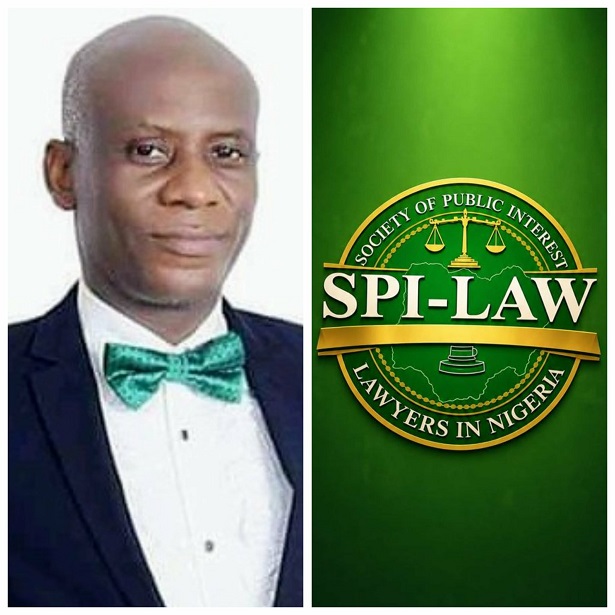
The Society of Public Interest Lawyers in Nigeria (SPI-LAW) has raised “grave concern” on statements attributed to Kano State Governor Abba Kabir Yusuf in a recent interview with BBC Hausa.
SPI-LAW stated that widely reported accounts of the interview noted that Governor Yusuf stated that his political mentor, Senator Rabiu Musa Kwankwaso, directed him to meet President Bola Ahmed Tinubu and convey an assurance that, if the legal challenge to his election was allowed to proceed without interference and if the Supreme Court ultimately upheld his victory, they and their supporters would move to the All Progressives Congress (APC).
The human rights body warned that “Election petitions are adversarial proceedings decided on the basis of evidence and applicable law. Once a matter reaches the Supreme Court, its decision is final. Public statements that appear to attribute the result of such proceedings to political arrangements, rather than to the legal reasoning of the Court, inevitably erode the presumption of judicial independence upon which the rule of law rests.”
SPI-LAW urged “the Presidency, the National Judicial Council, and the leadership of the judiciary to take appropriate steps to investigate these these allegations and determine if they are true, reaffirm, publicly and unequivocally, the independence of the courts and the principle that judgments are rendered solely on the basis of law and evidence.”
Below is the full text of the press statement.
PRESS STATEMENT
Society of Public Interest Lawyers in Nigeria (SPI-LAW)
25 November 2026
Re: Reported Statements by the Governor of Kano State on BBC Hausa Concerning the 2023 Kano Governorship Election Petition and the Supreme Court Judgment
The Society of Public Interest Lawyers in Nigeria (SPI-LAW) has noted with grave concern the statements attributed to His Excellency, Governor Abba Kabir Yusuf of Kano State, in a recent interview with BBC Hausa.
According to widely reported accounts of the interview, the Governor stated that his political mentor, Senator Rabiu Musa Kwankwaso, directed him to meet President Bola Ahmed Tinubu and convey an assurance that, if the legal challenge to his election was allowed to proceed without interference and if the Supreme Court ultimately upheld his victory, they and their supporters would move to the All Progressives Congress (APC). The Governor further stated that he was instructed to swear on the Holy Qur’an, if necessary, to demonstrate the seriousness of that commitment.
SPI-LAW takes no position on the internal political disagreements between the individuals concerned. Our interest is solely in the constitutional and institutional implications of any public narrative that links the outcome of a judicial process, particularly a judgment of the Supreme Court of Nigeria, to political negotiations or assurances given to the executive branch of government.
Constitutional Imperatives
- The Constitution of the Federal Republic of Nigeria, 1999 (as amended) vests the judicial powers of the Federation in the courts established thereunder (Section 6). The independence of those courts is a foundational principle of the Nigerian constitutional order.
- Section 17(2)(e) of the Constitution affirms that the independence, impartiality and integrity of the courts of law, and easy accessibility thereto, shall be secured and maintained.
- Judicial officers swear an oath to “do right to all manner of people… without fear or favour, affection or ill-will.” Any suggestion, however framed, that the discharge of that duty can be influenced by political understandings or assurances given to political actors strikes at the heart of public confidence in the administration of justice.
Election petitions are adversarial proceedings decided on the basis of evidence and applicable law. Once a matter reaches the Supreme Court, its decision is final. Public statements that appear to attribute the result of such proceedings to political arrangements, rather than to the legal reasoning of the Court, inevitably erode the presumption of judicial independence upon which the rule of law rests.
SPI-LAW therefore:
- Calls on all public office holders and political actors to refrain from statements that create or reinforce the impression that the outcomes of judicial proceedings are, or can be, the subject of political bargaining;
- Urges the Presidency, the National Judicial Council, and the leadership of the judiciary to take appropriate steps to investigate these these allegations and determine if they are true, reaffirm, publicly and unequivocally, the independence of the courts and the principle that judgments are rendered solely on the basis of law and evidence;
- Reminds all parties that the integrity of the judicial process is not a partisan matter. It is a national institutional asset. Once public confidence in that integrity is damaged, it is extremely difficult to restore.
SPI-LAW remains committed to the defence of constitutionalism, the rule of law, and the independence of the judiciary through lawful advocacy and public-interest engagement. SPI-LAW will continue to monitor developments and, where necessary, take all appropriate steps consistent with our mandate to protect the foundations of democratic governance in Nigeria.
Signed
For: Society of Public Interest Lawyers in Nigeria (SPI-LAW)
Director, Media & Publicity
(C) CITY LAWYER Magazine. All rights reserved. To join our Channel, click here. Click here to join our WhatsApp chatroom. Contact us at citylawyermag@gmail.com or 081-3838-0083.
Leave a Reply
You must be logged in to post a comment.