
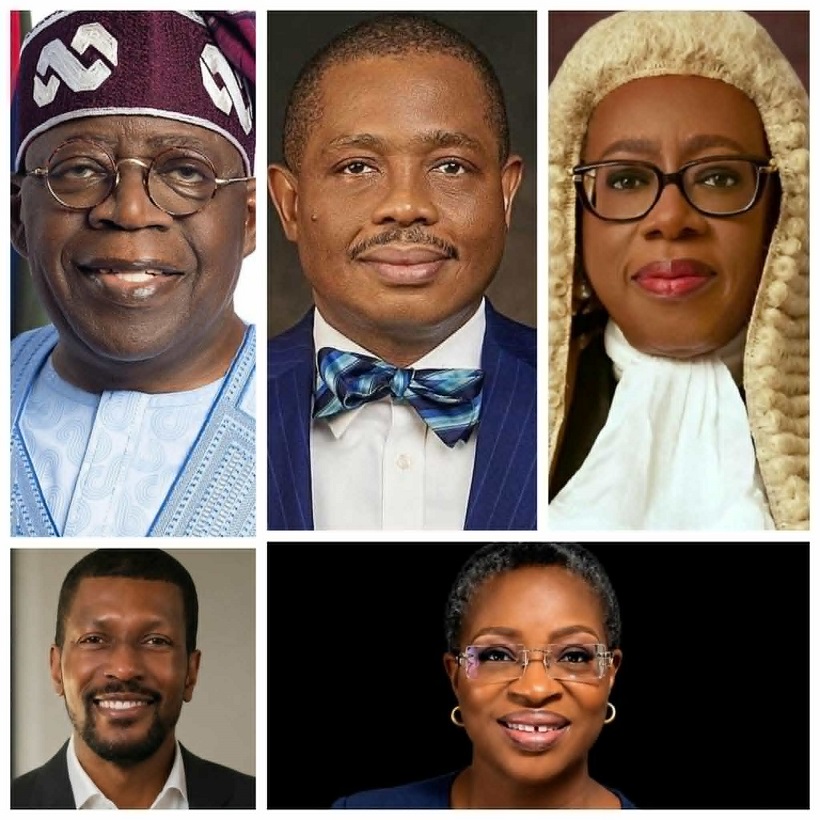
Today, in the spirit of engineering institutional memory and accountability, we begin a series on the Afam Osigwe Legacy. The Series will highlight opinions of lawyers and justice sector stakeholders on the stewardship of Mr. Afam Osigwe SAN as the 32nd Nigerian Bar Association (NBA) President.
AFAM OSIGWE’S PRESIDENCY: A TENURE OF COURAGE, REFORM, AND CONTROVERSY
By Henry Chibuike Ugwu
Leadership Forged Through Persistence
Every presidency has a story, but some stories begin long before the oath of office is taken. For Mazi Afam Osigwe, SAN, the journey to the presidency of the Nigerian Bar Association (NBA) was marked by setbacks and persistence. His presidency, therefore, is best understood not only by what he did in office, but also by the long and difficult road that brought him there.
In 2018, while seeking the office of NBA President, Osigwe was disqualified by the Electoral Committee of the NBA, a decision he vigorously challenged as unlawful and inconsistent with the Association’s Constitution. Rather than retreat from public life, he continued to serve the profession, remained actively engaged in Bar affairs, and six years later emerged victorious, taking the oath of office on 29th August, 2024, as the 32nd President of the NBA. His eventual emergence was, in many respects, a testament to resilience, persistence, and unwavering commitment to the profession.
The Promises of the Osigwe Presidency
At his inauguration, President Osigwe laid out an ambitious vision for the Association. He pledged to defend the rule of law, hold governments accountable, pursue meaningful justice sector reforms, strengthen constitutional democracy, improve lawyers’ welfare, reform the NBA Constitution, ensure prompt issuance of NBA Stamp and Seal, and position the Bar as a fearless voice on issues affecting Nigerians.
It was a manifesto that promised an activist Bar, independent of political influence, and unapologetic in defending constitutional governance.
A Bar That Spoke Truth to Power
Perhaps the defining feature of the Osigwe administration has been its willingness to speak truth to power.
Whether commenting on executive actions, legislative conduct, or judicial performance, the NBA under his leadership consistently projected itself as an independent institutional voice. His criticism of the Senate’s screening of ambassadorial nominees, which he described as falling short of constitutional expectations, reflected a broader insistence that democratic institutions must be subjected to genuine accountability.
The administration repeatedly called on governments at all levels to improve security, respect fundamental rights, deepen transparency, and reduce the cost of governance. On matters affecting constitutional democracy, the NBA maintained a visible and often influential presence.
Confronting the Judiciary and Demanding Reform
Unlike many Bar leaders who avoid publicly criticizing the judiciary, Osigwe consistently acknowledged that the justice sector itself requires reform.
His repeated warnings about conflicting judgments, judicial corruption, delayed justice, and declining public confidence generated national debate. His observation that corruption within the judiciary represents one of the greatest threats to constitutional democracy was controversial but resonated with many lawyers who believe meaningful reform cannot occur without confronting uncomfortable realities.
Yet his criticism was accompanied by constructive proposals. The administration advocated comprehensive justice sector reforms, improved judicial welfare, mental health support for judges, better infrastructure, continuing judicial education, and institutional measures designed to restore confidence in the courts.
Defending Human Rights and Standing With the Vulnerable
Human rights advocacy remained another defining hallmark of the administration.
The NBA was vocal about issues involving unlawful arrests, constitutional freedoms, and police accountability. During the prosecution of persons arrested in connection with the “#EndBadGovernance” protests, the Association directed its branches to monitor proceedings nationwide while establishing pro bono legal representation for protesters who were unable to secure counsel.
Similarly, the administration strongly condemned reported mob attacks and sexual violence against women, insisting that cultural practices can never justify violations of human dignity. Such interventions reinforced the NBA’s traditional role as the guardian of civil liberties.
Another notable example of Afam Osigwe’s intervention as President of the NBA was his response to the attempted arraignment of lawyer and activist Gabriel Tsenyen by the Department of State Services (DSS). Osigwe personally showed up in court and ensured that the NBA designated a formidable defence team to represent the lawyer. His intervention demonstrated the NBA’s willingness, under his leadership, to stand up for its members when their professional and constitutional rights come under threat, and underscored the importance of an independent Bar in defending the rule of law.
Building a Stronger Profession Through Reform
Beyond public advocacy, the administration pursued reforms directed at the legal profession itself.
One notable achievement was the expansion of Continuing Legal Education through the NBA Institute of Continuing Legal Education. The accreditation of dozens of NBA branches as CLE providers significantly decentralized professional development, reduced costs, and enabled lawyers across Nigeria to earn mandatory Continuing Professional Development points closer to home.
Equally significant was renewed attention to lawyers’ welfare. Through the National Remuneration Committee, the administration sought to establish minimum remuneration standards for legal practitioners and address the longstanding concern that many young lawyers receive wages inconsistent with the dignity of the profession. Although implementation will largely depend on future administrations and employers, the initiative represented one of the boldest institutional efforts in recent years to confront poor remuneration within legal practice.
Expanding the NBA’s Institutional Reach
The administration also focused on rebuilding institutional partnerships.
One notable milestone was the NBA’s renewed partnership with UNICEF for the implementation of a Justice for Children and Young People programme reportedly valued at approximately ₦120 million. Beyond its financial significance, the partnership signalled renewed confidence by international development partners in the institutional capacity of the Nigerian Bar Association.
Likewise, the 2025 Annual General Conference received widespread commendation for its organisation, quality of discourse and participation, reinforcing the NBA Conference as one of Africa’s foremost legal gatherings.
The Uncomfortable Questions and the Other Side of the Record
No presidency is immune from criticism, and the Osigwe administration proved no exception.
One criticism that has emerged in some quarters of the Afam Osigwe administration is that, while the National Executive Committee appeared to function with considerably greater cohesion than its immediate predecessor, the office of the President sometimes seemed to overshadow the other national offices, with the visibility and institutional voice of the NBA becoming heavily concentrated around the President.
Take, for instance, the highly cerebral and innovative National Publicity Secretary, Bridget Ijeoma Edokwe, Esq., publisher of BarristerNG, whom many members of the Bar expected would play a more prominent role in shaping and projecting a progressive public image of the NBA in keeping with the responsibilities of her office. Instead, she remained relatively quiet in the public space, perhaps working diligently behind the scenes. The same could be said of several other accomplished lawyers who were prominent voices within the Bar before assuming national office but became considerably less visible thereafter.
This should not, however, obscure an important strength of the Osigwe administration. Unlike the immediate past National Executive Committee, which was repeatedly embroiled in public disagreements and allegations of constitutional breaches, the current National Executive Committee largely succeeded in presenting a more united front and functioning as a more cohesive team, even if the President’s overwhelming visibility sometimes made the administration appear more presidential than collegiate.
The 2026 Election and the Crisis of Confidence
In addition, as the 2026 NBA elections approached, concerns emerged regarding the credibility of the electoral process. Some lawyers alleged irregularities, questioned aspects of the administration’s neutrality and expressed dissatisfaction with the conduct of the elections.
The sharp decline in voter participation in the 2026 election raised serious questions about the integrity, accessibility and effectiveness of the electoral process. In 2022, Yakubu Maikyau, SAN secured 22,342 votes in an election in which about 43,000 votes were cast. In 2024, Afam Osigwe, SAN secured 20,435 votes out of 40,451 votes cast. In 2026, however, Oyinkansola Badejo Okusanya, SAN emerged with just 12,317 votes, while only 26,184 votes were cast from an eligible voting population of 82,172 lawyers.The decline is therefore striking. Although a lower turnout does not by itself establish electoral malpractice, the scale of the decline, coupled with repeated complaints from lawyers who reportedly attempted but were unable to vote, raises legitimate concerns about disenfranchisement and whether the NBA’s electoral system is adequately designed to guarantee broad and meaningful participation by its members.
President Osigwe, however, consistently rejected allegations that he interfered in the electoral process or compromised the independence of the Electoral Committee of the NBA (ECNBA). He maintained that the ECNBA remained constitutionally independent and repeatedly urged lawyers not to use either the courts or political actors to undermine the Association’s electoral process.
Whether those explanations fully satisfied critics remains a matter of opinion. What is beyond dispute is that the election controversies exposed deep divisions within the Bar that the next administration must address.
A Record That Will Invite Debate
Measured against the promises made upon assuming office, the Osigwe presidency leaves behind a substantial record.
The administration restored the NBA’s visibility in national discourse, strengthened Continuing Legal Education, pursued improvements in lawyers’ welfare, deepened human rights advocacy, promoted judicial reform, defended constitutional governance, and enhanced the Association’s institutional engagement with development partners.
At the same time, the administration will inevitably be remembered for the controversies surrounding the 2026 elections and the broader debates they generated about transparency, neutrality, and institutional trust. While those criticisms remain contested and were firmly denied by the President, they nevertheless form part of the historical record of the administration.
On balance, however, history is likely to remember the Osigwe presidency as one defined more by activism than passivity, more by engagement than silence, and more by institutional ambition than administrative routine.
The Challenge Awaiting the Incoming President
The work of the Nigerian Bar Association remains unfinished.
Afam Osigwe, SAN is expected to hand over the presidency of the NBA to the incoming administration during the 66th NBA Annual General Conference, which is scheduled to take place in Port Harcourt, Rivers State, from August 21 to 28, 2026. The incoming President inherits an Association that is more visible, more vocal, and more influential than it was two years ago. Yet the Bar also appears more polarised, with growing dissatisfaction among segments of the profession regarding welfare, representation, and electoral confidence.
The next administration must therefore move beyond managing the Association to genuinely uniting it. Restoring confidence in the electoral process, implementing meaningful welfare reforms, strengthening institutional transparency, and ensuring that every lawyer, regardless of geography, seniority or professional status, feels represented should become defining priorities.
Ultimately, the enduring strength of the NBA will not be measured solely by the courage of one President, but by the collective determination of successive leaders to preserve its independence and integrity, promote the rule of law, fight for justice, protect human rights, and build a Bar that truly speaks for and serves every Nigerian lawyer.
- Henry Chibuike Ugwu, LL.B, LL.M, JD, B.L
Attorney at Law, Florida | Barrister and Solicitor of the Supreme Court of Nigeria
henrycugwu@gmail.com
- The views expressed in this article are entirely those of the author.
(C) CITY LAWYER Magazine. All rights reserved. To join our Channel, click here. Click here to join our WhatsApp chatroom. Contact us at citylawyermag@gmail.com or 081-3838-0083.