
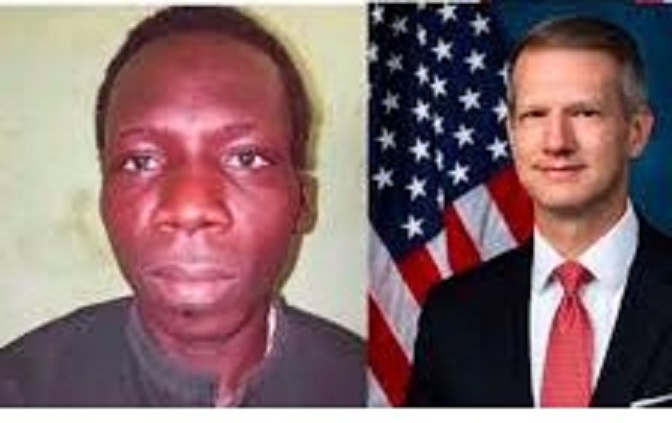
The release of Nigerian farmer, Sunday Jackson, from death row after over a decade in prison, secured through persistent advocacy by US Congressman Riley Moore, underscores a vital truth. This case exemplifies how nations upholding the rule of law must vigilantly protect individuals ensnared in systems where justice is arbitrary or absent. Such interventions not only rescue lives but also pressure weak institutions toward reform, as evidenced by global patterns of wrongful detention.
Sunday Jackson, a Christian farmer in Adamawa State, Nigeria, killed a Fulani attacker in self-defence during a home invasion but languished on death row for more than ten years. Congressman Riley Moore championed his cause through congressional hearings, media campaigns, and diplomatic visits to Nigeria, culminating in a pardon by Governor Ahmadu Umaru Fintiri on December 24, 2025. Moore hailed the outcome as a “major step forward” for religious freedom and US-Nigeria ties, while urging ongoing protection for Jackson.
Similar interventions abound, such as the 2022 US-Venezuela prisoner swap freeing seven Americans, including oil executives held nearly five years as bargaining chips, in exchange for two Maduro allies. In 2024, the James W. Foley Legacy Foundation tracked 54 Americans wrongfully detained or held hostage across 17 countries like Iran, Russia, and Venezuela, with many releases tied to US diplomatic pressure or swaps. These cases mirror Jackson’s, where foreign advocacy pierced opaque legal barriers in nations like Venezuela, a country ranked 143rd in the 2025 WJP Rule of Law Index.
Nigeria ranks 120th out of 143 countries in the 2025 World Justice Project (WJP) Rule of Law Index. This positions it 23rd out of 34 countries in Sub-Saharan Africa, with a slight overall score increase of less than one per cent from the prior year.
Global statistics on weak rule of law is alarming. The World Justice Project’s 2025 Rule of Law Index reveals an accelerating global recession, with 68 per cent of 143 countries declining, up from 57 per cent in 2024, driven by eroded judicial independence and civic freedoms.
In low-rule-of-law states like Nigeria, Africa saw widespread drops due to regulatory failures and authoritarianism. Pre-trial detention plagues these systems: over 77 per cent of India’s prisoners are under-trials, while globally, about three million languish unsentenced, disproportionately poor and vulnerable to fabricated charges.
These make vigilant oversight imperative. Nations like the US, governed by robust checks, bear a moral duty to monitor and intervene where judiciaries bow to executives or corruption thrives. President Trump’s 2025 executive order designating “State Sponsors of Wrongful Detention” equips such powers with sanctions and visa curbs, deterring abuses. Without this global watchdog role, millions more face indefinite peril; Jackson’s freedom proves that intervention works, saving lives and nudging reform in rule-of-law voids.
The concept of National sovereignty was not propagated for lawless and corrupt countries to hide under it and commit all kinds of atrocities against defenceless citizens.
CREDIT: VANGUARD Newspaper Editorial
(C) CITY LAWYER Magazine. All rights reserved. To join our Channel, click here. Click here to join our WhatsApp chatroom. Contact us at citylawyermag@gmail.com or 081-3838-0083.
Leave a Reply
You must be logged in to post a comment.