
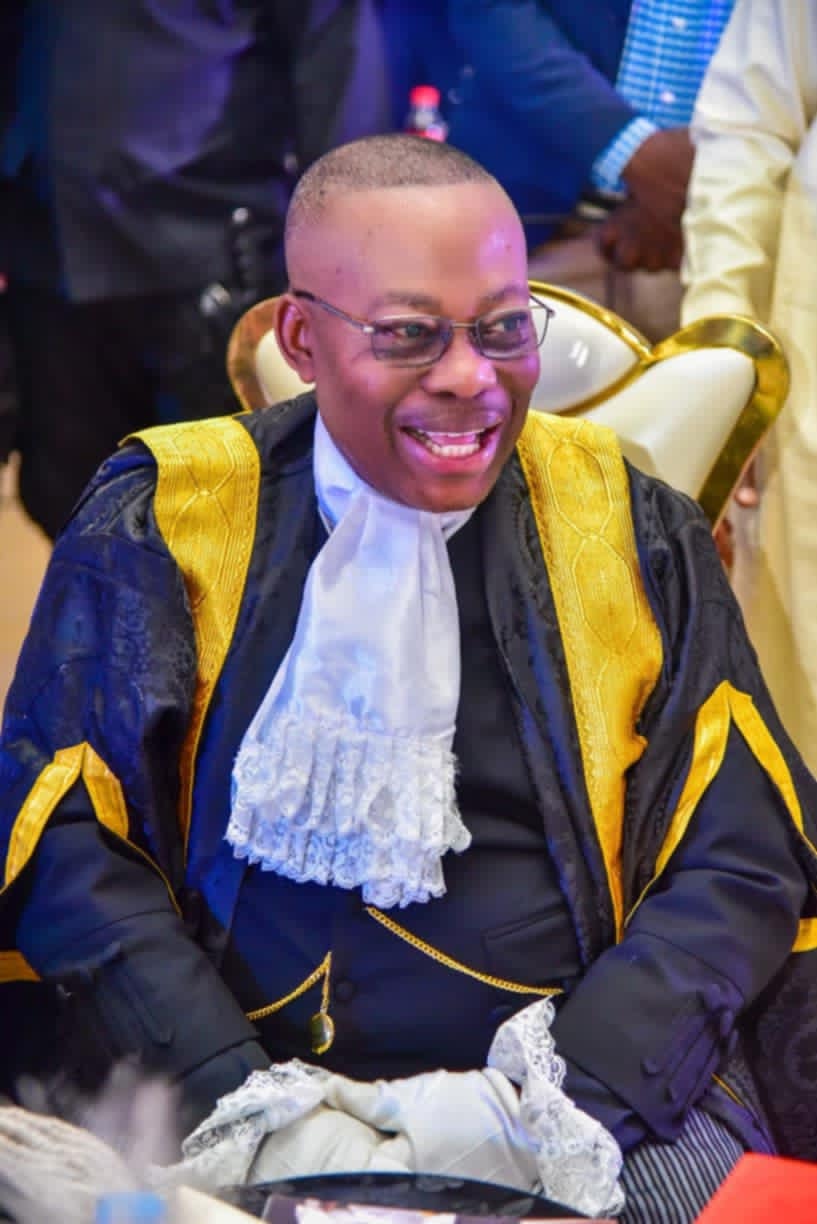
BY MONDAY UBANI
Section 83 and the Myth of Judicial Silence in Party Politics
The recent assertion by my brother, Festus Okoye Esq, that lawyers have become scapegoats in internal party conflicts owing to their recourse to the courts calls for careful constitutional and judicial interrogation.
At the centre of this debate lies Section 83 of the Electoral Act 2026, particularly the suggestion that it absolutely ousts the jurisdiction of the courts over the internal affairs of political parties.
With the greatest respect to lawyers who are holding this view, that broad interpretation may appear overstretched and not constitutionally sustainable.
Section 83(5) of the Electoral Act, read in isolation, appears to bar courts from entertaining disputes relating to party internal issues absolutely. On a literal reading, it suggests a legislative intent to shield political parties from judicial scrutiny. That may not absolutely be true. Such a construction ignores a foundational principle of Nigeria’s constitutional order, which is the fact that no Act of the National Assembly can override or diminish the judicial powers vested in the courts by the Constitution.
By virtue of Section 6(6)(b) of the 1999 Constitution (as amended), the courts possess inherent jurisdiction to determine all questions relating to civil rights and obligations. This provision is broad, entrenched, and immune from legislative erosion. Any statutory attempt, however artfully framed to exclude judicial intervention where legal rights are violated, remains debatable due to the supremacy clause of Section 1(3) of the 1999 Constitution as amended.
Nigerian jurisprudence has consistently put out a clear position on this issue. Starting with Lakanmi v AG(Western State), AG of the Federation v Abubakar, Abaribe v Speaker, Abia State House of Assembly etc where the courts have affirmed that the courts must be slow to hold that their jurisdiction has been ousted. These cases in fact reinforced judicial hostility toward clauses that attempt to shield institutions or government from judicial scrutiny.
It is true that the courts have traditionally exercised restraint in interfering with the internal affairs of political parties as seen in cases such as Okafor v. Onuoha, but this restraint has never been absolute. It is a rule of prudence, not a rule of absolute prohibition.
Once a dispute goes beyond internal issues as membership, leadership, party management, discipline, etc, and involves violation of legal rights, statutory compliance, or constitutional guarantees, the jurisdiction of the court is activated.
Even prior to the enactment of Section 83, the Supreme Court had clearly delineated exceptions to the doctrine of non-interference. They have always held that where there is a breach of the Electoral Act, violation of a party’s constitution, or infraction of constitutional provisions, the courts will not hesitate to intervene. If the intention of the legislature is to elevate the political parties in Nigeria above judicial scrutiny, it will certainly lead to an inevitable collision course between the two arms of government.
The consequences of such an interpretation of the present Section of the Act would be grave. It would leave party members who suffer exclusion, manipulation of primaries, or outright illegality without a remedy. That cannot represent the law, in my view. The enduring maxim, ubi jus ibi remedium (where there is a right, there is a remedy) remains a cornerstone of our legal system.
A more rational and constitutionally compliant reading of Section 83 is that it seeks to discourage frivolous litigation on parties’ internal issues, curb forum shopping, and encourage internal dispute resolution within political parties. The Electoral Act of 2026 cannot extinguish the courts’ sacred duty to do justice where a legal wrong is established.
Indeed, the judiciary – as illustrated in the earlier cases cited – have consistently resisted attempts to fetter its jurisdiction through ouster clauses. Such provisions are construed narrowly and, where they are inconsistent with constitutional guaranteed rights, they are rendered inoperative and invalid.
Equally of great concern is the penal dimension of the provision, which appears to target lawyers and litigants who approach the courts. It would be deeply troubling if legal practitioners were sanctioned for seeking judicial redress in appropriate cases.
The problem is who defines and determines appropriate cases? Does losing a case by a lawyer in court amount to a grave error on his path that should attract penalty as prescribed by the Act? How does a lawyer know which case he will win or lose in matters involving political parties? These are critical questions begging for answers.
We must agree, no matter the situation, that lawyers play a critical role in sustaining the rule of law by holding political actors accountable to legal standards. The greater danger lies not in judicial intervention through them but in legitimising impunity under the guise of party autonomy.
Having said that, however, in clear cases of abuse, where litigants and counsel pursue matters that are purely internal and devoid of legal rationale for its initiation, the imposition of sanctions may be justified. We are not ignorant of incidents of abuse, forum shopping, conflicting ex parte orders being sought and granted which were becoming irritating and scandalous necessitating the present amendment. However two wrongs cannot make a right, as we say in Nigeria.
In the final analysis, I reiterate that section 83 of the Electoral Act does not, and cannot, silence the courts. So long as the Constitution of Nigeria endures, judicial power remains intact. Any contrary interpretation is not only legally flawed but also risks undermining the very foundation of the rule of law. That, surely, could not have been the intention of the lawmakers.
I will gladly welcome further rejoinders from learned minds in the continuing interrogation of this important constitutional question.
- Ubani is a Senior Advocate of Nigeria and Policy Analyst.
(C) CITY LAWYER Magazine. All rights reserved. To join our Channel, click here. Click here to join our WhatsApp chatroom. Contact us at citylawyermag@gmail.com or 081-3838-0083.