
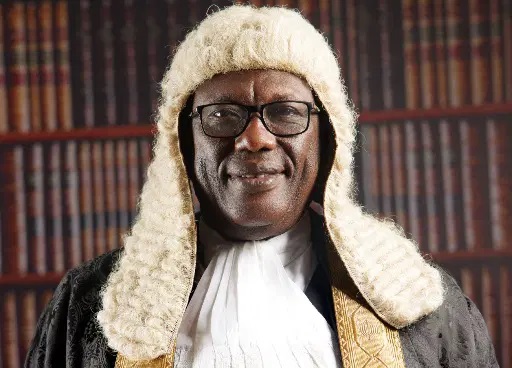
By Kachi E. Agwu
Recent public discussion surrounding the decision against Chief J-K Gadzama, SAN, by the Legal Practitioners Disciplinary Committee (LPDC) has understandably generated strong reactions.
For the general public, the language of a disciplinary sanction against a Senior Advocate can create an immediate impression of serious wrongdoing. But there is a much longer and more complicated story behind the matter.
At its centre is a N41.8 Billion judgment arising from one of the most tragic episodes in Benue State’s history, subsequent litigation over the enforcement of that judgment, competing claims concerning legal representation and retainership, an N8 billion consent judgment, and a prolonged disagreement between legal practitioners over who was properly authorised to act for the judgment creditors and who was entitled to professional fees.
The Origin: A N41.8 Billion Judgment
In October 2001, detachments of Nigerian soldiers attacked communities across four Local Government Areas of Benue State. Hundreds of civilians were reportedly killed, while homes and properties were destroyed.
In 2003, two separate suits were instituted at the Federal High Court by a total of 14 plaintiffs against the Nigerian Army and the Federal Government. The suits were subsequently consolidated. In 2007, judgment was delivered in favour of the plaintiffs in the total sum of approximately N41.8 billion.
An appeal followed in 2008. It was during the prolonged appellate process that the events which would eventually become the subject of the professional dispute began to unfold.
How The Professional Dispute Began
Mr Ocha P. Ulegede had acted for the 14 plaintiffs at the Federal High Court and had taken steps towards garnisheeing the judgment sum. Following years of delay in the appeal process, some judgment creditors explored other means of persuading the Federal Government to settle the judgement debt. According to available documents, Mr. Ulegede was subsequently debriefed through letters by the judgment creditors. Meanwhile, some of the judgment creditors then briefed Chief Gadzama SAN to pursue recovery of the judgment sum through garnishee proceedings.
However, a consent judgment for N8 billion had already been entered on 2 February 2015, based on the Terms of Settlement dated 23 January 2015 and filed on 30 January 2015. Court records indicate that none of the 14 judgment creditors signed those Terms of Settlement. Chief J-K Gadzama SAN only became aware of the N8 billion settlement when he sought to pursue recovery of the original judgment sum of N41.8 billion and encountered garnishee proceedings seeking to recover N8 billion.
This created a fundamental question: Who had authorised the compromise of a N41.8 billion judgment to N8 billion? And, perhaps more importantly, who had authority to act for the judgment creditors at that point?
The letter purportedly stated that the judgment creditors had been kept informed of the settlement negotiations, accepted the compromised sum of N8 billion, and were agreeable to the money being paid into an account opened by Mr. Ulegede.
Yet questions subsequently arose concerning the provenance and treatment of that letter. Although the letter was purportedly received by the Ministry of Justice in June 2014, subsequent correspondence from the Ministry responding to inquiries concerning the consent did not refer to it. Nor did Mr. Dodo, SAN, who had been briefed by the Ministry, refer to the letter when asked whether consent had been given.
Whether those circumstances ultimately affect the weight that should be attached to the document is a matter for the courts and the relevant legal processes. But it is plainly a matter that deserves to be understood before the public reaches conclusions about what happened.
The Court of Appeal and the Question of Judicial Observations
The dispute subsequently proceeded through the appellate courts. At the Court of Appeal, the panel made observations in passing that questioned the propriety of the legal representation provided to the judgment creditors by Chief J-K Gadzama SAN. Notably, however, the documents evidencing the authority to represent those clients were not before the particular panel at the time, meaning the remarks were made without full knowledge of the relevant facts. Critically, these observations did not constitute a binding finding; they were made in circumstances where all pertinent material was not before the court. Legal representatives involved have consistently maintained that there was no formal bar on representation and that the court’s remarks were made without the benefit of documentation concerning changes in client instructions.
A judicial observation made in the course of proceedings is not necessarily equivalent to a formal finding of professional misconduct. The distinction between the ratio decidendi of a judgment and remarks made in passing is well understood in legal practice. This then raises a pertinent question: Can judicial comments made in earlier proceedings properly be treated as conclusive evidence of professional misconduct in subsequent disciplinary proceedings?
The entire decision of the Court of Appeal has been appealed to the Supreme Court, where it remains pending determination.
The Supreme Court Proceedings
Following the Court of Appeal decision, the judgment creditors re-engaged Chief J-K Gadzama SAN, who subsequently filed proceedings at the Supreme Court. The matter has not been heard, although an Appellants’ Brief and a motion to regularise the appeal have been filed. It is also significant that Mr. Ulegede subsequently filed a Notice of Withdrawal dated 29 August 2017 and filed on 5 September 2017, purporting to withdraw the appeal on behalf of the appellants. It is understood that this was done without the approval of at least some of the judgment creditors and without approaching Chief J-K Gadzama SAN, who had filed the appeal.
Again, this raises a question that is difficult to ignore: Who had authority to act on behalf of the judgment creditors at each stage of this long-running dispute?
The 2019 Federal High Court Proceedings
The history becomes even more revealing in the proceedings before the Federal High Court in Abuja. By 2019, only seven of the 14 original judgment creditors were alive and present in court. Five of those seven were represented by Mr. Ulegede, while Chief J-K Gadzama SAN represented two: Elizabeth Aoughakaa and Terfa Akaagba.
The court was subsequently confronted with competing positions concerning the judgment creditors and the eventual distribution of the judgment sum. The matter was adjourned for a report of settlement, and the court urged Chief J-K Gadzama SAN , in his capacity as a chartered arbitrator, to assist in achieving an amicable resolution between the lawyers.
A settlement process followed, facilitated by senior members of the profession. Then came an important judicial development. On 19 August 2019, Justice I. E. Ekwo of the Federal High Court made an order absolute in respect of the N8 billion garnishee sum, directing that the money be paid into a designated account of the Federal High Court.
The court further required a disbursement schedule to be submitted for its consideration.
Two versions of the schedule subsequently emerged: one signed by Mr. Ulegede without the signatures of Chief J-K Gadzama SAN and the first-class chiefs, and another signed by Chief J-K Gadzama SAN and the first-class chiefs.
What Happened to the Money?
When the Federal Government subsequently indicated an intention to satisfy the judgment through promissory notes, Chief J-K Gadzama SAN wrote to the Office of the Attorney-General of the Federation, the Debt Management Office and the Federal Ministry of Finance in 2023 to draw attention to the subsisting Federal High Court order directing that the judgment sum be paid into the designated court account. Chief J-K Gadzama, SAN, also subsequently discovered at the Debt Management Office that the judgment creditors had executed a Power of Attorney in favour of Rhema Law Partners in 2018 for the realisation of the judgment sum.
Chief J-K Gadzama, SAN then communicated with Rhema Law Partners concerning the subsisting court order. There was also correspondence from the judgment creditors themselves containing a disbursement schedule identifying professional fees payable to the lawyers and other persons involved. These facts demonstrate that the professional relationship surrounding the judgment debt was considerably more complicated than a simple narrative of one lawyer taking another lawyer’s clients.
There were multiple lawyers, multiple stages of representation, court orders, changes in representation, powers of attorney, competing claims and a judgment sum whose administration continued for years.
The Central Question: Misconduct Or A Professional Fee And Retainership Dispute?
The underlying controversy did not arise from an allegation that Chief J-K Gadzama SAN defrauded a client. It did not arise from an allegation that he stole client money, and neither did it arise from a finding that he deceived a client into retaining him. It arose principally from competing claims concerning legal representation, authority, retainership and professional fees surrounding the recovery of a judgment debt, and, as such, this matter is a dispute between lawyers and not a question of misconduct. Interestingly enough, Chief J-K Gadzama SAN never had any professional relationship with the LPDC complainant, Mr Alashi.
Chief J-K Gadzama SAN did not have a prior professional relationship with Mr. Alashi, who subsequently brought the complaint before the LPDC. The professional relationship relevant to the underlying matter was between Mr. Alashi and Mr. Ocha Ulegede, who had worked together in connection with the judgment creditors. This raises an obvious question about the basis upon which a dispute arising from that professional relationship ultimately became a disciplinary complaint against Chief J-K Gadzama SAN. If the original disagreement concerned the relationship, representation and professional fees involving Mr. Ulegede and Mr. Alashi, it is important for the public to understand precisely how Chief J-K Gadzama SAN became implicated and what specific professional duty he was alleged to have breached. That distinction is particularly important given the documented record that he was separately instructed by judgment creditors and had no professional relationship with Mr. Alashi from which any competing obligation could have arisen.
The NBA Dimension
There is another piece of history that deserves consideration. A complaint concerning Chief J-K Gadzama SAN was previously brought before the Nigerian Bar Association in 2015 by Mr. Ulegede, who was, at the time, working with the current LPDC complainant, Mr. Alashi. The matter was considered by the NBA, and correspondence subsequently issued by the association did not sustain the allegation of professional wrongdoing against him.
That contemporaneous record is significant because it demonstrates that the questions surrounding this dispute were not created by the recent disciplinary proceedings. They have been contested for years and have previously passed through professional channels. The existence of a prior professional process and its outcome should form part of the historical context whenever the public assesses the present controversy.
What Should The Public Make Of All This?
It would be inappropriate for anyone outside the courts to declare that one side has finally prevailed on every disputed issue. That is precisely why legal institutions exist. But it is equally inappropriate to allow a complex professional dispute to be reduced to a headline that creates an impression far broader than the underlying facts. The documentary evidence indicates that Chief J-K Gadzama SAN acted on instructions from judgment creditors who retained him, that he did not poach or entice clients away from another lawyer, that he did not enter into any unlawful alliance to deprive another counsel of fees, and that the fees received by him were approved by the relevant clients and, where applicable, the court.
There is no evidence to support allegations of fraud, forgery, undue influence or other unethical conduct. The actions in question were taken pursuant to client instructions and court processes, and the evidence supporting this has not been given the weight it deserves in public discourse.
The LPDC is entitled to perform its statutory function, and its decisions are entitled to respect. But respect for an institution does not require the public to abandon critical examination of its reasoning. Indeed, confidence in professional institutions is strengthened when their decisions can withstand scrutiny and when the public is prepared to examine the evidence and competing interpretations carefully.
It tells the story of a N41.8 billion judgment, reduced through a consent process to N8 billion; of judgment creditors whose instructions and representation changed over time; of competing lawyers and professional fee claims; of multiple court proceedings; of a 2019 Federal High Court order concerning the custody and disbursement of the judgment sum; of subsequent efforts to ensure compliance with that order; and of years of professional disagreement that ultimately found its way into disciplinary proceedings.
Against that background, the central question deserves to be asked carefully: Was the conduct at issue truly a case of professional misconduct warranting a three-year suspension, or did a complicated dispute over retainership, representation and professional fees become something considerably larger in the disciplinary process?
That is a question for the appropriate legal processes to ultimately resolve. For the public, however, one thing is already clear. There is considerably more to this story than the headline, and before a man’s professional reputation, built over decades, is defined by a single disciplinary decision, the public deserves the opportunity to understand the whole story.
- Kachi E. Agwu is a Legal Analyst
- The views expressed in this article are entirely those of the author
(C) CITY LAWYER Magazine. All rights reserved. To join our Channel, click here. Click here to join our WhatsApp chatroom. Contact us at citylawyermag@gmail.com or 081-3838-0083.