
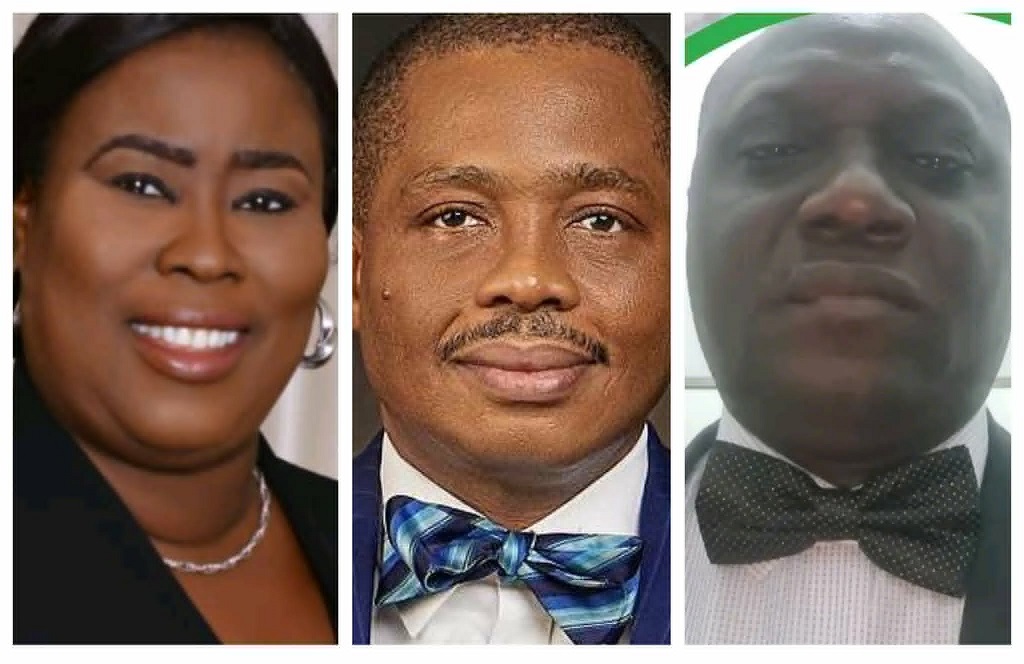
The President of the Nigerian Bar Association (NBA), Mr. Afam Osigwe SAN has directed all branches to accord full recognition to virtual attendance in all branch matters.
The directives are a direct fallout of a CITY LAWYER exclusive report which highlighted the decision by the Branch Elections Appeal Committee (North) rejecting virtual attendance of meetings as a requirement to participate in branch elections.
The decision drew a lot of flak from Bar Leaders who viewed it as retrogressive in an era where technology is being increasingly mainstreamed in the legal and justice sectors.
The directives have however drawn diverse comments from senior lawyers. While some see the directives as a saving grace for thousands of lawyers and aspirants who would otherwise have been disenfranchised by the Appeals Committee’s decision, most lawyers argue that the directives lack any force of law as to upturn the decision.
Titled “DIRECTIVE TO ALL NBA BRANCHES ON MEMBERSHIP PARTICIPATION, TECHNOLOGY UTILIZATION, AND THE CONDUCT OF BRANCH ELECTIONS,” the directives were personally signed by the NBA President and issued pursuant to Section 9(5)(a)(iii) of the Constitution of the Nigerian Bar Association, 2015 (as amended in 2025) “which empowers the President of the Association to direct and coordinate the activities of all Branches of the Association, and in fostering an inclusive, transparent, and progressive Bar that reflects contemporary realities while preserving the democratic values upon which the Association is founded.”
He stated that the directives “are issued for compliance by all Branches to ensure uniformity in the administration of Branch affairs and electoral processes across the Association.”
Speaking pointedly to the controversy that has trailed the Appeals Committee’s decision, Osigwe stated in the sub-theme titled RECOGNITION OF PHYSICAL, VIRTUAL, AND HYBRID PARTICIPATION that “The Constitution of the Nigerian Bar Association expressly recognizes attendance at meetings through physical presence, virtual participation by designated electronic means, or a hybrid combination of both.
“Accordingly, no Branch shall interpret the Constitution as restricting participation in Branch activities exclusively to physical attendance where the Branch permits, adopts, or recognizes virtual or hybrid meetings as part of its operations.
“For the avoidance of doubt, attendance at duly convened meetings through approved virtual platforms shall constitute valid attendance for all purposes recognized by the Constitution, Branch Bye-Laws, and Branch administrative processes.”
To leave no-one in doubt as to effect of the directives, the NBA President stated that “Any Branch that recognizes, permits, or conducts meetings through virtual or hybrid means shall accord equal recognition to members who participate through such approved platforms.
“Consequently, no member shall be disqualified, disenfranchised, denied voting rights, or excluded from contesting or participating in any Branch election solely on the ground that the member attended meetings virtually rather than physically, provided that such participation is verifiable through attendance records maintained by the Branch.
“Any rule, guideline, policy, practice, or interpretation that recognizes virtual attendance for meeting purposes but denies similar recognition in determining electoral qualification shall be inconsistent with the principles of fairness, inclusiveness, equal participation, and the spirit of the Constitution.”
He went a step further to encourage branches “to take practical, progressive steps towards adopting and utilizing technology in the administration of Branch affairs and electoral processes,” adding that “Branches are reminded that the legal profession continues to evolve in response to technological innovation and changing professional realities.”
Osigwe directed branches to “review their electoral guidelines, policies, practices, and procedures to ensure conformity with the principles contained in this Directive and the Constitution of the Nigerian Bar Association.”
He also directed branches “to ensure full compliance with this Directive as provided under Section 9(5)(a)(iii) of the Constitution,” adding that “Any complaint, petition, or dispute arising from non-compliance with this Directive may be referred to the appropriate organs of the Association for consideration and such action as may be necessary.”
Bar Leaders have disagreed sharply on the effect of the directives on the decision of the Appeals Committee.
They were however near unanimous in commending the NBA President for issuing the directives which they termed as ‘highly progressive and in tune with modern trends.’
Firing the first salvo, former NBA Ikorodu Branch Chairman, Mr. Adebayo Akinlade argued that branches whose members are adversely impacted by the Appeals Committee decision could deploy the directives to remedy the situation.
His words: “The President’s Directive presents additional grounds for those who feel that they have been disenfranchised to put in a fresh appeal or to petition for an extra-ordinary general meeting of the Branch to consider the directive.
“We are lawyers; I don’t think this should create any impossible situation for anyone. Where there is a right, there is a remedy.”
Fiery critic of NBA President and NBA Section on Public Interest and Development Law (SPIDEL) Financial Secretary Barbara Onwubiko hailed the directives, saying that “I can call the President my brother today.”
She however wondered whether the directives would have a real impact, saying: “Putting emotions aside, what will happen to candidates who were disqualified by ELCOM and whose disqualification was upheld by the Appeal Committee? Does the NBA President have the power to issue a directive that affects the decision of the Appeal Committee? By issuing this directive, hasn’t the President effectively overruled an appeal regarding the decision of the Election Appeal Committee, whose decision as we know is final?”
She also argued that the Appeals Committee may have become functus officio as to be incapable of reviewing its highly controversial decisions on virtual meetings, saying: “Can the Appeal Committee sit on an appeal already decided by them? Aren’t they now functus officio and final?”
Aligning with Onwubiko, former NBA First Vice President, Mr. John Aikpokpo-Martins issued a poser, saying: “Can the President overrule the Supreme Court on an issue no matter how right the President is?”
The erstwhile Chairman of NBA-SPIDEL answered in the negative, saying: “Let me say that I agree with the position of the President. But those disqualified under that decision of the Appeal committee stand disqualified except the Appeal committee reverses itself.”
He also stated that “The constitution/byelaws specifically provides that the decision of the appeal committee is final,” indicating that the NBA President could not override a decision made by an Appeals Committee.
CITY LAWYER gathered from impeccable sources that Osigwe had told NBA National Executive Council (NEC) members at a recent quarterly meeting in Awka that he lacked the constitutional power to upturn a decision of an Appeals Committee. This followed a complaint against a decision of the NBA Branch Elections Appeal Committee (East) relating to the forthcoming NBA Port Harcourt Branch Elections.
Arguing that the Appeals Committee can reverse itself, Akinlade also stated that “members in a general meeting can also reverse it (Appeals Committee decision). My point is that the members can, because the members are the supreme authority.”
But Aikpokpo-Martins countered, saying that such oversight powers had been taken away from branches by the NBA Constitution. His words: “The powers of members in a meeting is as donated by the constitution and not assumed. So, if the constitution takes certain powers away, then so shall it be.
“Let me say that those provisions were inserted to check cabals at the branch level. Any attempt to downplay (the powers) will be very detrimental.
“I won’t say much, but I know how and why those provisions were put there; it is to give stability in branches during elections.”
On his part, human rights activist, Mr. Vincent Adodo stated that the directives “may be a basis to ask the Appeal Committee to review their decision.” As such, the disqualified aspirants may again approach the Appeals Committee for a review of its decision in light of the presidential directives.
But Onwubiko poses yet another hurdle for the disqualified aspirants and disenfranchised branch members who may be barred from voting on the basis that only physical attendance of meetings is approved.
She argues that any review of its decision by the Appeals Committee may be caught by the constitutional deadline for determination of all appeals, posing the question: “Has the constitutionally mandated timeframe for hearing and determining appeals not yet expired?”
In a sharp rebuke, former NBA Vice President, Mr. Steve Abar described the directives as “another form of impunity, even if the decision aligns with popular opinion.”
It remains to be seen whether the directives will be a glimmer of hope especially for the disqualified aspirants and disenfranchised branch members across the Northern Zone which is impacted by the Appeals Committee decision.
(C) CITY LAWYER Magazine. All rights reserved. To join our Channel, click here. Click here to join our WhatsApp chatroom. Contact us at citylawyermag@gmail.com or 081-3838-0083.