
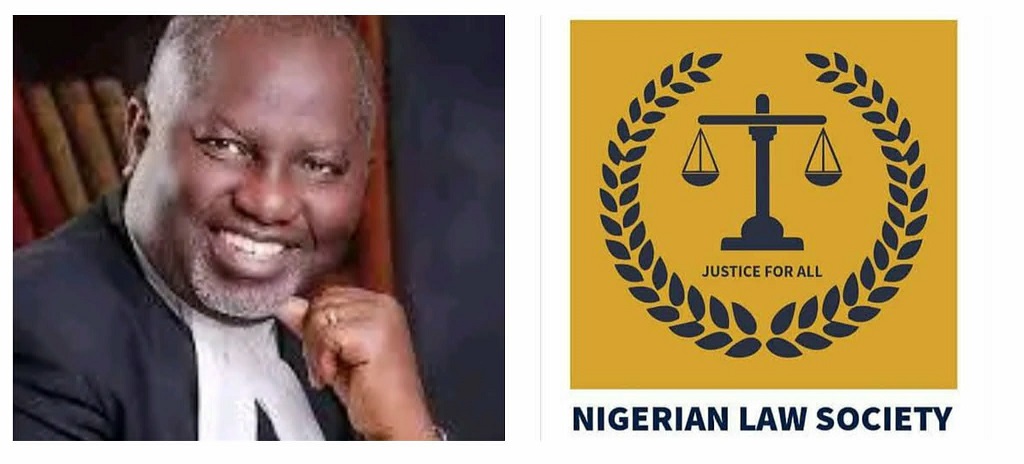
NEWS RELEASE
NIGERIAN LAW SOCIETY CONCLUDES LANDMARK 4TH ANNUAL GENERAL CONFERENCE WITH RENEWED COMMITMENT TO CONSTITUTIONAL DEMOCRACY AND THE RULE OF LAW
The Nigerian Law Society (NLS) has successfully concluded its 4th Annual General Conference, held virtually from 15–17 July 2026, bringing together distinguished jurists, Senior Advocates of Nigeria, academics, legal practitioners, policymakers and professionals from across Nigeria and beyond for three days of robust constitutional discourse.
Held under the theme “Constitutional Democracy and the Role of the Judiciary,” the Conference examined the judiciary’s indispensable role in preserving constitutional order, strengthening democratic institutions and safeguarding the rule of law in Nigeria.
The proceedings were chaired by High Chief Ibrahim Eddy Mark, Life Bencher and President of the African Bar Association (AfBA) while the keynote address was delivered by renowned constitutional scholar Prof. Ugoji Adanma Eze, Ph.D., Member, New York City Bar & Barrister-at-Law, the Honourable Society of Gray’s Inn UK.
Participants also received goodwill messages from the African Bar Association (AfBA), the Pan African Lawyers Union (PALU), Dr. Kayode Olushola Fasua, FCNA, Chief Executive Officer of the Association of National Accountants of Nigeria (ANAN), Asiwaju Adeboyega Awomolo, SAN, Former Chair Body of Benchers and Chief Joe-Kyari Gadzama, OFR, SAN, Founder of the Nigerian Law Society. The event witness the participation of other dignitaries like Prof Peter Akpe SAN, Yomi Aliyu, SAN, Adebayo Ojo SAN, Prof. N. S. Ojukwu, Dr. Hannibal Uwaifor SAN, Dr. Col. Bello Fadile, etc.
Setting the tone for the Conference, Prof. Ugoji Adanma Eze challenged participants to rethink constitutional democracy beyond elections and political majorities. Delivering a compelling keynote address, she observed that while every generation inherits a Constitution, no generation inherits constitutional democracy in a finished form. Rather, constitutional democracy must continually be renewed through fidelity to the rule of law, resilient institutions and public officials who recognise that political power is a constitutional trust, not an entitlement.
Prof. Eze argued that elections alone cannot sustain democracy. Rather, constitutional democracy derives its strength from a delicate balance between popular sovereignty and constitutional supremacy. In her words, while the people are the source of political authority, the Constitution remains the guardian of its legitimate exercise.
Central to her presentation was the indispensable role of the judiciary. She described the courts as custodians of the constitutional order, entrusted not with governing the nation but with ensuring that every arm of government acts within constitutional limits. Judicial independence, she noted, is not a privilege for judges but a constitutional guarantee for the people, ensuring that justice is administered according to law rather than political influence or public sentiment.
She further stressed that constitutional democracy flourishes where judicial independence is matched by judicial accountability, institutional integrity and sustained public confidence. Looking to the future, she urged legal practitioners, judges, policymakers and citizens alike to embrace their collective responsibility for strengthening constitutional culture in an era increasingly shaped by technological innovation, artificial intelligence and emerging constitutional challenges.
The keynote address was enriched by thoughtful interventions from the panel of discussants comprising Prof. Maxwell M. Gidado, SAN, OON, Dr. Sylvanus Barnabas, and Mr. Paul Eshiemomoh, whose presentations expanded the conversation on constitutional governance and judicial responsibility.
In his discussant paper titled “Constitutional Democracy and the Role of the Judiciary: Who Decides – The People or the Courts?” Prof. Maxwell Gidado, SAN, OON, offered a constitutional perspective on the relationship between democratic legitimacy and judicial authority.
His memorable proposition that “the people decide politically, while the courts decide constitutionally” echoed the keynote’s central thesis that constitutional democracy requires both democratic legitimacy and constitutional fidelity.
He explained that while political authority originates from the people through elections, the Constitution defines the limits of that authority, with the judiciary serving as its faithful interpreter and guardian.
Prof. Gidado also cautioned against judicial overreach while affirming the necessity of judicial review where constitutional violations occur. He advocated stronger electoral institutions, greater internal democracy within political parties, enhanced civic education and continued judicial restraint as practical steps towards consolidating Nigeria’s constitutional democracy.
The Conference’s goodwill messages reinforced the recurring themes of judicial independence, institutional integrity and constitutional governance.
In particular, Dr. Kayode Olushola Fasua, FCNA, Chief Executive Officer of ANAN, described the judiciary as the final bulwark against arbitrariness and the guardian of constitutional supremacy, emphasising that democracy can only thrive where courts remain independent, courageous and insulated from undue influence. He commended the Nigerian Law Society for convening a timely national conversation and expressed confidence that the Conference would generate practical ideas capable of strengthening constitutional governance and advancing the rule of law.
The Conference also featured a Showcase Session on the Right to Freedom of Association and Assembly, reflecting the Society’s continued commitment to constitutional rights, professional freedom and democratic participation.
From the successful deliberations of the 4th Annual General Meeting, to the keynote address delivered by Prof. Ugoji Adanma Eze, Ph.D., the insightful contributions of the discussants, the goodwill messages from leaders of the legal and allied professions, the showcase sessions, and the closing Golf Tournament, the event reflected the Nigerian Law Society’s unwavering commitment to advancing constitutional democracy, strengthening judicial independence and promoting the rule of law.
The successful conclusion of the Nigerian Law Society’s 4th Annual General Meeting and 4th Annual General Conference 2026 marks yet another significant milestone in the Society’s continued growth and influence. By every measure, the event was a resounding success—fostering meaningful dialogue, strengthening professional relationships, advancing constitutional scholarship, and reaffirming the Nigerian Law Society’s position as a leading voice in the promotion of constitutional governance, judicial integrity and democratic development in Nigeria.
(C) CITY LAWYER Magazine. All rights reserved. To join our Channel, click here. Click here to join our WhatsApp chatroom. Contact us at citylawyermag@gmail.com or 081-3838-0083