
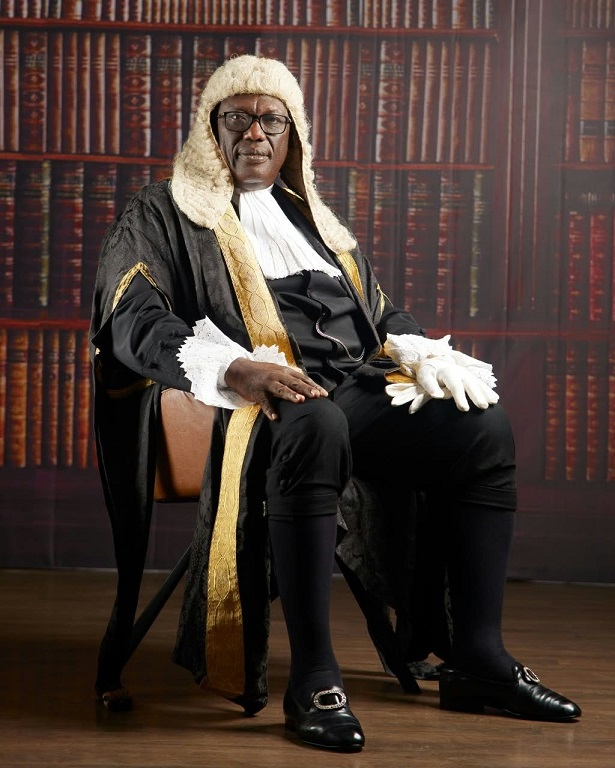
The Federal High Court sitting in Abuja has granted the reliefs sought by Chief J-K Gadzama, SAN, against the three-year suspension imposed on him by the Legal Practitioners Disciplinary Committee (LPDC).
The court, while delivering a landmark judgment in the matter that has dominated legal discourse recently, held that the enforcement of the disciplinary direction against Gadzama was unconstitutional and raised fundamental questions about the treatment of professional disputes within Nigeria’s legal disciplinary system.
In a judgment delivered today, the Court held that the Direction of the LPDC given on 29 July, 2026, in Complaint No. BB/LPDC/1314/2024 (Chris Alashi, Esq. v Ocha P. Ulegede, Esq. & Anor), was unconstitutional insofar as it affects Gadzama.
The Court specifically declared that the implementation or enforcement of the LPDC Direction against Gadzama, in the absence of an effective appellate mechanism, is inconsistent with Sections 36(1), 36(2) and 6(6)(b) of the Constitution of the Federal Republic of Nigeria and is therefore unconstitutional and unlawful. It held that the LPDC lacked jurisdiction in the matter, rendering its eventual decision against Gadzama unenforceable.
The judgment further restrains the Respondents from implementing, publishing, transmitting, enforcing or otherwise giving effect to the LPDC Direction as it affects Gadzama, even as it restrained the Chief Registrar of the Supreme Court from making or causing to be made any disciplinary notation against him pursuant to the Direction or the publication or dissemination of the Direction as a final disciplinary determination against him.
The Respondents in the proceedings are the Body of Benchers, the Legal Practitioners Disciplinary Committee, the Chief Registrar of the Supreme Court and Chris Alashi, Esq.
The judgment follows Gadzama’s challenge to the disciplinary decision in which he maintained that the proceedings had fundamentally misconstrued the nature of the underlying dispute and subjected him to professional discipline over circumstances arising principally from questions of representation, retainership and professional fees.
The original controversy arose from the administration and distribution of compensation arising from the Zaki-Biam litigation and involved competing claims concerning legal representation and professional fees.
Gadzama’s position was that he had never had a professional relationship with Mr Chris Alashi, the complainant before the LPDC, and had never received instructions from him. His case was that he had instead been separately instructed by some of the judgment creditors.
The disciplinary proceedings ultimately resulted in the LPDC directing that Gadzama be suspended from legal practice for three years, while Chief Ocha P. Ulegede was separately suspended for two years. The Federal High Court had earlier granted Gadzama leave to seek judicial review and an order of certiorari to bring the LPDC Direction before the Court.
There are strong indications that today’s judgment may have provided the judicial relief sought by Gadzama and, in doing so, has placed an important question before Nigeria’s legal profession about the constitutionality of LPDC processes and decisions and where the boundary lies between a professional disciplinary matter and a dispute arising from representation, retainership and professional fees.
There are indications that such a distinction is significant in Gadzama’s case given his strident argument throughout the proceedings that Alashi was not his client and that he (Gadzama) had no professional relationship with him. He had contended that the professional relationship at the heart of the original fee disagreement involved Alashi and other counsel in the matter.
According to a statement made available to CITY LAWYER, “The Court’s decision therefore represents more than the setting aside of a three-year suspension. It affirms Chief Gadzama’s decision to subject the LPDC Direction to judicial scrutiny and establishes an important judicial pathway for lawyers who may find themselves confronted with disciplinary decisions that they believe were reached outside the proper scope of disciplinary jurisdiction or without sufficient regard to constitutional guarantees of fair hearing and due process.
“For Chief J-K Gadzama, SAN, the judgment marks a significant vindication of his decision to challenge the LPDC Direction through the courts. Rather than accepting a disciplinary sanction that he maintained was unsupported by the evidence and applicable law, he pursued judicial review and obtained the full suite of substantive reliefs he sought from the Federal High Court.
“The case has consequently moved beyond the question of one lawyer’s suspension and has produced an important judicial pronouncement on disciplinary jurisdiction, constitutional safeguards and the need for an effective mechanism through which disciplinary decisions affecting legal practitioners can be challenged.
“Chief J-K Gadzama, SAN, has consistently maintained his respect for the institutions regulating the legal profession while challenging the LPDC Direction on its legal and evidential basis. His challenge has now resulted in the Federal High Court granting all the principal reliefs sought in his application. The judgment is expected to generate further discussion among lawyers, legal academics and professional bodies concerning disciplinary jurisdiction, due process and the appropriate mechanism for resolving disputes over professional fees.
“For now, however, the position is clear: the Federal High Court has declared the implementation and enforcement of the three-year LPDC suspension against Chief J-K Gadzama, SAN, unconstitutional in the absence of an effective appellate mechanism and has restrained the Respondents from implementing or treating the LPDC Direction as a final disciplinary determination against him. The reliefs granted by the Court are, however, subject to the establishment of an effective appellate platform through which decisions of the relevant disciplinary authorities may be challenged, reinforcing the constitutional importance of ensuring that lawyers subject to disciplinary proceedings have access to an effective mechanism of appeal and judicial protection.”
(C) CITY LAWYER Magazine. All rights reserved. To join our Channel, click here. Click here to join our WhatsApp chatroom. Contact us at citylawyermag@gmail.com or 081-3838-0083.
Leave a Reply
You must be logged in to post a comment.