
On 11 November 2026, on Channels Television’s Politics Today, Mr. Kalu Kalu, a member of the African Democratic Congress (ADC) and a lawyer to former Vice President Atiku Abubakar, called Justice Peter Lifu of the Federal High Court a “coconut judge”. He was discussing the judgment of 5 November on the leadership of the party. The presenter asked him to withdraw the remark. He replied: “Because of time, I do withdraw it.”
On 13 November the President of the Nigerian Bar Association (NBA), Oyinkansola Badejo-Okusanya, SAN, referred the matter, with the broadcast materials, to the Legal Practitioners Disciplinary Committee (LPDC). On 14 November the ADC, through its National Publicity Secretary, Mr Bolaji Abdullahi, called the NBA’s reaction selective. It warned the NBA against being seen as “throwing its hat into the political ring on the side of a ruling party”.
Which of them is right? The best guide I know is the judgment of Lord Denning, Master of the Rolls, in R v Commissioner of Police of the Metropolis, ex parte Blackburn (No 2) [1968] 2 QB 150.
The facts were close to ours. Mr Quintin Hogg, QC, then a Member of Parliament, who later became Lord Chancellor as Lord Hailsham of St Marylebone, wrote an article in Punch in February 1968 attacking a decision of the Court of Appeal. It began: “The recent judgment of the Court of Appeal is a strange example of the blindness which sometimes descends on the best of judges.” Mr. Blackburn applied to have him committed for contempt. The Court of Appeal refused.
Of the contempt jurisdiction Lord Denning said, at page 154: “It is a jurisdiction which undoubtedly belongs to us but which we will most sparingly exercise.” He continued: “Let me say at once that we will never use this jurisdiction as a means to uphold our own dignity. That must rest on surer foundations. Nor will we use it to suppress those who speak against us. We do not fear criticism, nor do we resent it. For there is something far more important at stake. It is no less than freedom of speech itself.”
He then stated the right of the critic in the widest terms: “It is the right of every man, in Parliament or out of it, in the Press or over the broadcast, to make fair comment, even outspoken comment, on matters of public interest. Those who comment can deal faithfully with all that is done in a court of justice. They can say that we are mistaken, and our decisions erroneous, whether they are subject to appeal or not.”
Then came the passage that matters most today: “All we would ask is that those who criticise us will remember that, from the nature of our office, we cannot reply to their criticisms. We cannot enter into public controversy. Still less into political controversy. We must rely on our conduct itself to be its own vindication.”
And he closed: “Exposed as we are to the winds of criticism, nothing which is said by this person or that, nothing which is written by this pen or that, will deter us from doing what we believe is right; nor, I would add, from saying what the occasion requires, provided that it is pertinent to the matter in hand. Silence is not an option when things are ill done.”
Of the article, he said: “The article contains an error, no doubt, but errors do not make it a contempt of court.” Of its author he said: “Mr. Quintin Hogg has criticised the court, but in so doing he is exercising his undoubted right.” Lord Justice Salmon agreed that “no criticism of a judgment, however vigorous, can amount to contempt of court”, provided it keeps within “reasonable courtesy and good faith”.
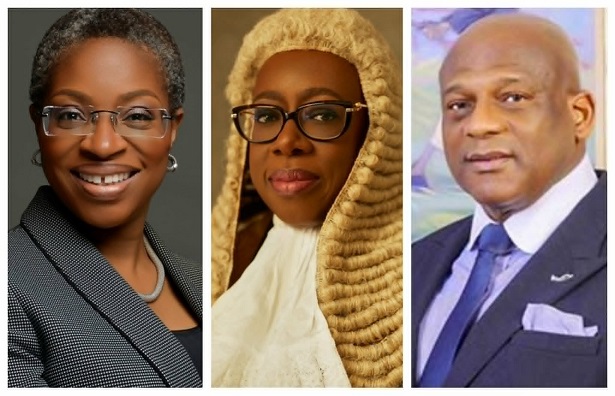
Set what the NBA President did beside that judgment. She said that lawyers have the right to scrutinise judgments, to challenge judicial reasoning and to identify errors, but that they should do so by legal argument and not by personal attacks. That is Lord Denning’s line. She silenced no one. She did not ask that Justice Lifu be shielded from criticism. She referred one remark, with the recording, to the body appointed by law to decide such matters, and she said that Mr Kalu would be heard before the Committee decided anything.
She also had the rules of the profession behind her. Rule 31(1) of the Rules of Professional Conduct for Legal Practitioners 2023 provides: “A lawyer shall always treat the court with respect, dignity and honour.” Rule 31(2) provides that a lawyer who has a proper ground for complaint against a judicial officer “shall make his complaint to the appropriate authorities.”
Now set the ADC’s statement beside the same judgment.
The ADC says the NBA is “victimising a brave lawyer like Kalu for expressing his political views”. But “coconut judge” is not a political view. Nor is it criticism of a judgment. It says nothing about the reasoning or the orders. Mr Hogg wrote that a judgment showed “blindness”, and in the same breath he called its authors “the best of judges”. That is outspoken comment within reasonable courtesy and good faith. An insult to the man is not.
The ADC asks: “What has Kalu Kalu said about Justice Peter Lifu that the Court of Appeal has not already said?” The answer is: a great deal. The ADC points to a ruling of June 2026 in which, it says, the Court of Appeal described the judge’s conduct as the “highest form of judicial impertinence”. That was a superior court, in a reasoned judgment, saying “what the occasion requires”, and what it said was “pertinent to the matter in hand”. It censured what the judge did. It gave no licence to anyone to abuse what the judge is.
The ADC says: “Respect for the courts must never become a requirement for silence in the face of injustice.” I agree, and so did Lord Denning: “Silence is not an option when things are ill done.” But nobody has asked the ADC or Mr Kalu to be silent. They may say that the judgment is mistaken and erroneous. They have appealed against it. What a lawyer may not do is insult the judge.
The ADC says: “There is no respectful way to address evil, and the NBA cannot teach us one.” For a lawyer there is, and the rules prescribe it: a complaint to the National Judicial Council (NJC), which disciplines judges, and an appeal against the judgment. Mr Hogg showed in 1968 that criticism can be both severe and courteous.
The ADC calls Mr Kalu “a politician, who also happens to be a lawyer”. A lawyer does not put off his obligations when he enters politics. Mr Hogg, a future Lord Chancellor, was both Queen’s Counsel and a politician, and he kept within the line.
Lastly, the ADC fears that the NBA has entered the political ring. Lord Denning answers that directly. Judges “cannot reply” to their critics: “We cannot enter into public controversy. Still less into political controversy.” Justice Lifu cannot go on television to answer the man who insulted him. If the Bar does not speak for him, no one will. To defend a judge from abuse is not to take a side. The duty would be the same if a lawyer of the ruling party insulted a judge who had ruled for the opposition.
Yet on one point the ADC is right, and the NBA should take it to heart. The ADC says: “The NBA cannot demand respect for the judiciary while appearing indifferent to conduct that brings the judiciary into disrepute.” Lord Denning said that judges “must rely on our conduct itself to be its own vindication”. When the Court of Appeal censures the conduct of a judge, the Bar’s duty to the administration of justice is engaged just as much as when a judge is insulted. I criticised that conduct in print myself in June. If the NBA was silent then, it should not be surprised that its voice is questioned now. The Bar’s defence of judges persuades only when it is even handed.
There is a second lesson. Lord Denning said that the contempt power would be “most sparingly” exercised, and that the dignity of judges “must rest on surer foundations”. The disciplinary power deserves the same restraint. Whether a petition was needed after a withdrawal on air, however grudging, or whether a firm public statement would have served, is a fair question. But that is a matter of judgment, not of principle, and the Committee will hear Mr Kalu before it decides.
My conclusion is this. The NBA President was right to speak for a judge who cannot speak for himself, and she drew the line exactly where Lord Denning drew it: criticise the judgment as vigorously as you please, but do not insult the judge. The ADC is wrong to call that victimisation, and wrong to say that there is no respectful way to confront what it believes to be injustice. It is right only in this: the Bar must hold the same line when judges themselves go wrong.
- Eyimofe Atake, PhD (Cantab) is a Senior Advocate of Nigeria.
(C) CITY LAWYER Magazine. All rights reserved. To join our Channel, click here. Click here to join our WhatsApp chatroom. Contact us at citylawyermag@gmail.com or 081-3838-0083.
Leave a Reply
You must be logged in to post a comment.