
By Raphael Christopher
NIGERIA MUST REFORM CHILD JUSTICE — NOT SIMPLY EXPAND DETENTION
A NATIONAL CHILD JUSTICE EMERGENCY
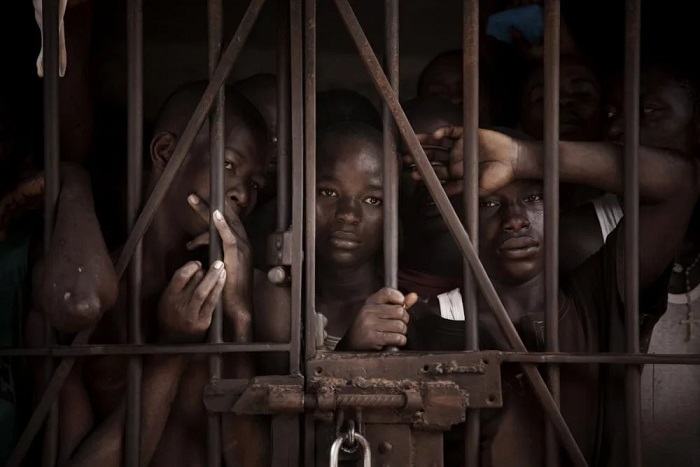
The revelation that approximately 26,000 Nigerian children enter custodial and remand facilities every year, that about 74% remain in pre-trial detention, and that 68% have no lawyer from their first contact with the justice system, should trouble the conscience of every Nigerian.
The figures were disclosed by the Minister of Women Affairs and Social Development, Imaan Sulaiman-Ibrahim, during the Nigerian Bar Association’s 66th Annual General Conference in Port Harcourt. More than 122,000 children are reported to have passed through custodial facilities over five years.
But behind every statistic is a child. A child who may have made a mistake.A child who may have been wrongly accused. A child who may not understand what is happening. A child whose future can be permanently altered by what happens during the first few hours after arrest.
The Minister correctly identified the first 48 hours as a critical intervention period and called for lawyers to be available to children within 24 hours. She also urged the NBA to expand Duty Solicitor Schemes nationwide.The question, however, is not simply whether Nigeria should reform child justice.
It is how Nigeria can do so effectively without creating another expensive bureaucracy that eventually becomes underfunded and dysfunctional.
THE PROBLEM IS IMPLEMENTATION
Nigeria does not necessarily suffer from a complete absence of legal provisions. The Child Rights Act already provides a framework for child justice administration. Section 209 provides mechanisms for disposing of certain cases without formal trial, including supervision, guidance, restitution and compensation. The problem is the distance between law and lived reality.
A right that exists in legislation but is unavailable at the police station is a theoretical right.A right to diversion that is rarely exercised is an ornamental right.A right to legal representation that arrives after a child has spent weeks in custody may arrive too late.
Nigeria therefore needs an implementation model that is cheap, decentralised, measurable and capable of operating with existing institutions.
I therefore make the following proposals:
- CREATE A NATIONAL “FIRST 48 HOURS” CHILD JUSTICE PROTOCOL
The first reform should not require the construction of new buildings. Every police station, correctional facility and relevant security agency should have a simple mandatory Child Arrest Checklist.
Once an arrested person appears to be under 18, the officer should immediately record:
- Name and alleged age;
- Parent/guardian contact;
- Date and time of arrest;
- Reason for arrest;
- Whether the child has a lawyer;
- Whether the child has been informed of their rights;
- Whether diversion is potentially appropriate;
- Whether medical or welfare intervention is required.
The form could be digital and integrated into existing police reporting systems.
Cost: Low.
The reform principally requires standardisation, training and accountability rather than new infrastructure.
- THE NBA SHOULD ESTABLISH A “LAWYER BESIDE EVERY CHILD” SCHEME
The Minister’s proposal for Duty Solicitor Schemes deserves immediate implementation. But it should be designed intelligently.
Rather than expecting every lawyer to provide unlimited pro bono representation, each NBA branch could establish a Child Justice Duty Rota.
For example: One day = one duty lawyer.
The lawyer receives notification when a child is arrested and provides the initial legal intervention.
The scheme could be supported by:
- NBA branches;
- Legal Aid Council;
- university law clinics;
- accredited NGOs;
- child-protection organisations;
- law firms fulfilling structured pro bono commitments.
This creates a national network without requiring the government to employ thousands of additional lawyers.
The initial objective should be modest: No child should enter formal interrogation, remand proceedings or prosecution without an opportunity to obtain appropriate legal assistance.
- CREATE A FREE NATIONAL CHILD JUSTICE HOTLINE
Nigeria already possesses enormous telecommunications infrastructure.
Instead of establishing expensive offices everywhere, government and the NBA could create a single national child justice emergency number connected to regional duty lawyers.
A police officer, parent, teacher, social worker or child could call.
A simple automated system could identify the state and connect the caller to the duty solicitor.
This could be supplemented by WhatsApp and SMS because smartphones and messaging platforms are already widely used.
The technology already exists. What is missing is the institutional connection.
- MAKE DIVERSION THE DEFAULT FOR APPROPRIATE MINOR OFFENCES
Detention should not be the automatic answer to childhood offending.
Section 209 of the Child Rights Act already provides a statutory basis for diversion from formal trial.
What Nigeria needs is a uniform diversion protocol.
For appropriate cases, police and prosecutors should be required to consider:
- Warning and caution;
- Family conferencing;
- Counselling;
- Supervision;
- Restitution;
- Mediation or reconciliation;
- Community service where legally appropriate;
- School reintegration;
- Skills or vocational programmes.
The objective should be accountability without unnecessarily destroying a child’s future.
A child who steals a phone should not automatically be placed on a pathway that transforms a childhood mistake into a lifelong criminal identity.
- INTRODUCE CHILD JUSTICE CLINICS IN LAW FACULTIES
Nigeria has hundreds of law students and law faculties. Every accredited law faculty should be encouraged to establish a Child Justice Legal Clinic, supervised by qualified lawyers.
Students cannot replace practising counsel, but under proper supervision they can assist with:
- legal research;
- case preparation;
- documentation;
- monitoring;
- family liaison;
- court observation;
- rights education;
- diversion referrals.
This would provide experiential legal education while expanding access to justice.
Cost: relatively low.
The infrastructure already exists in many universities.
- USE MOBILE CHILDREN’S COURTS BEFORE BUILDING MORE COURTS
The Minister has also called for substantive Family Courts and mobile family and children’s courts in underserved communities. This is desirable, but Nigeria must learn from previous infrastructure-heavy reforms. We should not begin by constructing magnificent buildings.
Begin with mobile justice sittings.
Existing magistrates’ courts and appropriate public buildings can be designated on particular days for child justice matters.
A judge, prosecutor, duty solicitor and social-welfare officer can sit together.
The principle should be: Move the justice system closer to the child, rather than forcing the child to travel endlessly through the justice system.
- PRESUME MINORITY WHERE AGE IS UNCERTAIN
Age determination is fundamental. The Minister reportedly noted that only about half of Nigerian children under five have their births registered, creating difficulties where age becomes disputed.
A child whose age cannot immediately be established should not lose child-specific protections merely because documentation is missing.
Nigeria should introduce a clear presumption of minority where there is credible uncertainty, subject to appropriate age assessment procedures.
This is a simple but potentially transformative safeguard.
- CREATE A CHILD JUSTICE PERFORMANCE DASHBOARD
Reform without measurement becomes rhetoric.
The Federal Ministry of Women Affairs and Social Development, NBA, Legal Aid Council, Ministries of Justice, police and relevant justice institutions should publish an annual dashboard containing:
- Number of children arrested;
- Number receiving legal assistance within 24 hours;
- Number diverted;
- Number detained;
- Average duration of detention;
- Number receiving first court appearance within the prescribed period;
- Number of functioning Family Courts;
- Number of cases concluded;
- Number of children reunited with families;
- Number successfully reintegrated into education or vocational training.
The Minister has already called for measurable indicators under a proposed Child Justice Compact.
That proposal should be embraced. What gets measured can be managed.
- CREATE STATE CHILD JUSTICE COORDINATION UNITS
Each State Attorney-General should designate a small Child Justice Coordination Unit.
It need not be another large department. It could consist of existing officers from:
- Ministry of Justice;
- Police;
- Ministry of Women Affairs/Social Development;
- Correctional Service;
- Legal Aid;
- Judiciary;
- NBA;
- accredited civil society organisations.
Its principal responsibility would be to identify bottlenecks and ensure that cases do not disappear into the system.
- TRAIN THE FRONTLINE, NOT JUST THE JUDGES
Training must begin where the child first encounters the law.
Police officers, prosecutors, lawyers, magistrates, correctional officers and social workers should receive practical training in:
- child psychology;
- interviewing children;
- diversion;
- safeguarding;
- trauma-informed practice;
- children’s rights;
- age determination;
- legal aid;
- restorative justice.
The emphasis should be practical rather than ceremonial.
A two-day annual multidisciplinary workshop may accomplish more than another expensive conference.
THE ECONOMIC ARGUMENT FOR REFORM
There is also a powerful economic case.Keeping a child in custody costs money.Court appearances cost money.Transportation costs money.
Legal proceedings cost money. Correctional administration costs money. Repeated detention costs money. But prevention, diversion, family conferencing, supervised rehabilitation and community reintegration can be considerably less resource-intensive.
Therefore, child justice reform is not merely a humanitarian project; it is also an economic reform.
The cheapest prison is the one we never have to build. The cheapest court case is the one appropriately diverted before formal prosecution.
The cheapest intervention is often the lawyer who arrives early enough to prevent unnecessary detention.
THE NBA MUST LEAD
The Minister’s challenge to the Nigerian Bar Association deserves serious consideration. The legal profession cannot simply defend the system after it has failed a child. It must intervene before the failure becomes irreversible. The NBA has branches across Nigeria. That network is an extraordinary national asset.
If each branch establishes a child justice duty rota, partners with Legal Aid and law clinics, and maintains a simple register of children requiring assistance, the profession could dramatically reduce the 68% representation gap.
This is an opportunity for the NBA to demonstrate that access to justice is not merely a conference theme; it is a professional obligation.
FROM 26,000 TO ZERO — IS ZERO POSSIBLE?
Perhaps not immediately.But the ambition should be clear.Not necessarily zero children entering custody—for some children accused of serious offences, secure detention may sometimes be necessary.
Rather:
Zero children without early legal assistance.Zero unnecessary child detention.Zero children lost in administrative limbo.Zero children treated as adults because their age cannot immediately be established.
Zero appropriate diversion cases ignored simply because the system lacks a mechanism to act.
The Minister has rightly challenged Nigeria to move beyond laws on paper to justice that children can actually experience.That is the real test.
A nation is judged not only by how it treats its most powerful citizens, but by what happens to the child who enters a police station frightened, confused and alone.Nigeria does not necessarily need another mountain of legislation.
It needs implementation, coordination, early intervention, accountability and political will.
The reform can begin tomorrow morning—with one checklist, one telephone call, one duty lawyer and one child protected from unnecessary detention.
Because when the State takes a child into custody, the State assumes a profound responsibility for that child’s dignity, safety and future.
And the first 48 hours may determine everything that follows.
RECOMMENDED REFORM PACKAGE
Low-cost priorities for immediate implementation:
- National First-48-Hours Child Arrest Protocol.
- NBA Child Justice Duty Solicitor Rota.
- National child justice emergency hotline.
- Mandatory diversion assessment for eligible cases.
- University child justice legal clinics.
- Mobile child justice court sittings.
- Presumption of minority where age is uncertain.
- State Child Justice Coordination Units.
- Annual frontline child-justice training.
- Public Child Justice Performance Dashboard.
- NBA–Government Child Justice Compact.
- Annual independent audit of children’s detention.
The objective should be simple: move Nigeria from a system that asks, “What offence did the child commit?” to one that also asks, “What happened to this child, what does this child need, and how do we protect society without destroying the child’s future?”
#ChildJustice #ChildRights #AccessToJustice #NigerianBarAssociation #NBA #LegalAid #Diversion #JuvenileJustice #JusticeForChildren #HumanRights #LawReform #Nigeria #RestorativeJustice #LegalEducation #LeadershipLessons
- Dr. Raphael Christopher ACIArb (UK) is a senior lawyer and CEO of Just Arbitration Worldwide
(C) CITY LAWYER Magazine. All rights reserved. To join our Channel, click here. Click here to join our WhatsApp chatroom. Contact us at citylawyermag@gmail.com or 081-3838-0083.